You’ve found the right garage door repair service following best practices, scheduled your appointment, and now the technician is on their way. Understanding what happens during a professional garage door repair service call helps you prepare properly, ask the right questions, and ensure you receive quality workmanship. This comprehensive guide walks you through every stage of a typical service visit, from initial assessment to final testing, helping you feel confident and informed throughout the entire repair process.
Whether you’re dealing with broken springs, malfunctioning openers, or damaged panels, knowing what to expect eliminates anxiety and helps you recognize professional service versus substandard work. Proper preparation also saves time, reduces costs, and ensures technicians can work efficiently to restore your garage door’s functionality quickly and safely.
Understanding the Service Call Process
Professional garage door repair follows a structured process ensuring thorough diagnosis, quality repairs, and customer satisfaction. Understanding this process helps you evaluate whether your chosen provider meets professional standards.
Before the Technician Arrives
Confirm appointment details: Reputable companies confirm appointments 24 hours in advance and provide arrival windows rather than vague timeframes. Expect confirmation calls or texts with technician names, photos, and estimated arrival times. Professional services respect your schedule and communicate clearly about any delays.
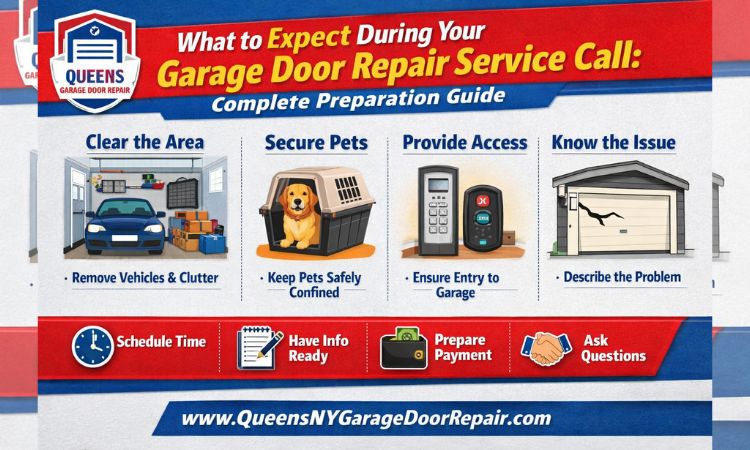
Clear the work area: Remove vehicles from the garage, clear items near the door, and ensure pets are secured. Technicians need unobstructed access to the entire door, tracks, opener, and control panel. Clearing the area beforehand prevents delays and allows technicians to work safely and efficiently.
Document existing damage: Take photos or videos of your garage door’s current condition, especially if insurance claims are involved. Documentation protects you from liability for pre-existing damage and provides evidence if disputes arise about work performed.
Gather warranty information: Locate documentation for your garage door, opener, and any previous repairs. Warranty coverage may reduce or eliminate repair costs, but technicians need proof of valid warranties before applying manufacturer coverage.
Initial Assessment and Diagnosis
Professional introduction
Qualified technicians introduce themselves, present company identification, and explain their credentials. This initial interaction sets the tone for professional service. Technicians should be clean, uniformed, and courteous while maintaining professional boundaries.
Safety inspection
Before touching anything, professional technicians perform comprehensive safety assessments. This includes testing safety sensors, examining spring tension, checking track alignment, and identifying immediate hazards. Safety inspections protect both you and the technician while ensuring repairs address underlying issues rather than just symptoms.
Problem diagnosis
Technicians methodically test each garage door component to identify failure causes. This involves operating the door manually and with the opener, listening for unusual sounds, measuring spring tension, examining wear patterns, and checking electrical connections. Thorough diagnosis prevents incomplete repairs requiring follow-up service calls.
Explanation of findings
Quality service providers explain problems in clear, understandable language without using technical jargon to confuse customers. Technicians should show you the damaged components, explain why failure occurred, and discuss whether repairs or replacements are necessary. Visual demonstrations help you understand the severity and urgency of needed work.
Estimate and Approval Process
Detailed written estimate
Professional companies provide itemized written estimates specifying labor costs, parts prices, potential additional charges, and total cost estimates. Verbal-only estimates create opportunities for disputes when final bills arrive significantly higher than discussed amounts.
Multiple repair options
Experienced technicians often present several repair approaches with varying costs and benefits. For example, you might choose between repairing versus replacing damaged panels, or selecting different quality levels for replacement springs. Understanding options helps you make informed decisions balancing budget constraints with long-term value.
No-pressure decision making
Reputable services never pressure immediate decisions. You should feel comfortable asking questions, requesting time to consider options, or getting second opinions for major repairs. High-pressure tactics signal unreliable contractors more interested in closing sales than providing appropriate solutions.
Warranty and guarantee information
Before approving work, technicians should clearly explain warranty coverage on parts and labor. Understanding warranty terms prevents surprises if problems recur and establishes accountability for workmanship quality.
During the Repair Work
Once you approve repairs, professional technicians follow systematic procedures ensuring quality work and your property’s safety.
Proper Safety Procedures
Disconnecting power: For any work involving garage door openers or electrical components, technicians disconnect power at the circuit breaker rather than just unplugging devices. This prevents accidental power restoration during repairs and protects against electrical shock.
Spring tension release: Replacing garage door springs involves releasing extreme tension that can cause serious injury if mishandled. Professional technicians use proper tools and techniques to safely release tension before removing old springs. Never attempt spring replacement yourself or allow unlicensed individuals to perform this dangerous work.
Door securing: When working on tracks, cables, or other components, technicians properly secure garage doors using locking pliers or specialized clamps. Unsecured doors can fall unexpectedly, causing property damage or serious injuries.
Work area protection: Quality service providers protect your property using drop cloths, removing debris promptly, and being careful around vehicles or stored items. Professional technicians treat your property respectfully, maintaining cleanliness throughout the service visit.
Quality Workmanship Indicators
Proper tools and equipment: Professional technicians arrive with complete tool sets specific to garage door repair. Makeshift solutions, borrowed tools, or trips to hardware stores during repairs indicate inexperienced or under-equipped contractors.
Genuine replacement parts: Reputable companies use manufacturer-approved or equivalent-quality replacement parts. Cheap aftermarket components may reduce initial costs but typically fail prematurely, requiring repeated repairs. Ask about part quality and manufacturer warranties.
Methodical approach: Experienced technicians work systematically, completing each step properly before proceeding. Rushing through repairs or skipping steps like lubrication or adjustment often causes premature failures or safety issues.
Attention to detail: Quality repairs include final adjustments ensuring smooth, quiet operation. Technicians should balance door tension, adjust track alignment, lubricate moving parts, and fine-tune opener settings. These finishing touches distinguish professional service from adequate repairs.
Testing and Verification
After completing repairs, comprehensive testing ensures everything functions correctly and safely.
Functional Testing
Manual operation: Technicians should manually open and close the door multiple times, checking for smooth movement, proper balance, and consistent operation. Doors should move easily without binding, jerking, or unusual resistance.
Opener operation: For repairs involving garage door openers, technicians test all functions including wall button operation, remote controls, smartphone apps, and keypad entry. Complete testing verifies proper installation and identifies any programming or connectivity issues.
Safety feature verification: Critical safety testing includes confirming photoelectric sensors stop and reverse doors when obstructed, testing automatic reversal if the door contacts objects while closing, and verifying emergency release mechanisms function correctly. Never accept repairs without thorough safety testing.
Load testing: After spring replacement or major repairs, technicians should test door balance by disconnecting the opener and manually lifting the door to mid-height. Properly balanced doors remain stationary, indicating correct spring tension. Doors that fall or rise indicate improper adjustment requiring additional work.
Final Adjustments and Customer Education
Fine-tuning performance: Based on test results, technicians make final adjustments optimizing performance. This includes adjusting opener force settings, fine-tuning limit switches, balancing door tension, and lubricating components. These refinements ensure long-term reliability and prevent premature wear.
Maintenance recommendations: Professional service concludes with maintenance advice helping you prevent future problems. Technicians should explain lubrication schedules, inspection techniques, and warning signs indicating developing issues. This education empowers you to maintain your garage door properly between professional service visits.
Documentation and receipts: Before leaving, technicians should provide detailed invoices specifying work performed, parts installed including model numbers, warranty information, and payment terms. Complete documentation protects you if problems arise and proves service history for future repairs or home sales.
Questions and concerns: Quality service providers encourage questions and address any concerns before leaving. Never hesitate to ask for clarification about repairs, maintenance, or door operation. Reputable technicians willingly explain their work and ensure you feel confident about the service received.
After the Service Visit
Professional service doesn’t end when technicians leave. Understanding post-service expectations helps you recognize quality companies and address any issues promptly.
Immediate Post-Service Actions
Test operation multiple times: After the technician leaves, operate your garage door several complete cycles watching and listening for any irregularities. Immediate testing helps identify problems while the service provider can quickly return to address issues.
Verify door security: Ensure all locks function correctly, security features work properly, and the door closes completely and securely. Security verification confirms repairs haven’t compromised your home’s protection.
Save documentation: Keep all service receipts, warranty information, and maintenance recommendations in a dedicated folder. Organized documentation simplifies warranty claims, proves service history, and helps future technicians understand your system’s repair history.
Review service quality: Take time to evaluate the service experience while details remain fresh. Consider factors like technician professionalism, work quality, cleanliness, communication, and whether the repair solved your problem. Reviews help other homeowners find quality services and provide valuable feedback to companies.
Warranty and Follow-Up Service
Understand warranty coverage: Review warranty terms carefully, noting coverage periods, what’s included, and claim procedures. Understanding warranties before problems arise prevents confusion and ensures you receive covered services promptly.
Monitor performance: Pay attention to garage door operation in the days and weeks following repairs. New sounds, sluggish operation, or other changes may indicate developing problems covered under warranty. Early reporting ensures timely repairs under warranty coverage.
Schedule preventive maintenance: After major repairs, schedule regular maintenance appointments preventing future problems. Professional maintenance extends equipment life, maintains warranty coverage, and identifies minor issues before they become expensive emergencies.
Red Flags During Service Visits
Recognizing unprofessional behavior or substandard work helps you protect yourself from poor service and potentially fraudulent contractors.
Warning Signs of Problematic Service
Changing estimates without explanation: If final costs significantly exceed original estimates without clear reasons and your approval, this indicates dishonest pricing practices. Legitimate additional charges require explanation and approval before proceeding.
Reluctance to explain work: Technicians who refuse to explain repairs, rush through explanations, or become defensive when questioned often lack expertise or hide substandard work. Professional technicians welcome questions and patiently explain their work.
Incomplete testing: Skipping safety tests, rushing through functional verification, or leaving without demonstrating proper operation indicates careless work. Never accept service without comprehensive testing and demonstration.
Pressure for immediate payment: While payment upon completion is standard, high-pressure tactics demanding immediate payment before you can inspect work or aggressive collection methods signal unprofessional operations. Reputable companies provide reasonable payment terms and respect your need to verify work quality.
Lack of cleanup: Professional technicians clean work areas, remove all debris, and leave your property as clean or cleaner than found. Leaving messes or damaged property indicates disrespect and unprofessional standards.
Special Considerations for Emergency Service
Emergency garage door repairs involve unique circumstances requiring special preparations and considerations.
Emergency Service Expectations
Response time verification: When calling for emergency service, confirm expected arrival times and get technician contact information for status updates. True emergency services respond within hours, not days.
After-hours pricing: Emergency service, especially during nights, weekends, or holidays, typically costs more than standard appointments. Ask about emergency service fees upfront to avoid surprise charges. Higher emergency pricing is standard industry practice reflecting after-hours availability costs.
Temporary versus permanent repairs: Emergency technicians may perform temporary repairs if permanent solutions require specialty parts or daylight hours. Understand whether emergency repairs are temporary fixes requiring follow-up service or complete solutions.
Security priorities: Emergency situations often involve security risks with doors stuck open or inoperable. Prioritize securing your property even if permanent repairs must wait. Temporary solutions should restore security even if full functionality requires additional work.
Preparing for Major Repairs or Replacements
Some garage door issues require extensive work or complete system replacements rather than simple repairs.
Vehicle access arrangements: Major repairs may require several hours. Arrange alternative transportation if you need vehicle access during service appointments.
Home access planning: If repairs block garage entry, ensure alternative home entry routes. Some repairs require keeping doors closed for extended periods affecting home access through garage entries.
Noise and disruption awareness: Major garage door work creates significant noise and activity. Inform family members, neighbors in attached units, or schedule service when disruption affects fewer people. Professional technicians work efficiently but cannot eliminate all noise and disruption.
Payment arrangements: Major repairs or replacements may involve substantial costs. Confirm accepted payment methods, financing options if needed, and ensure you can pay the agreed amount upon completion.
Conclusion: Ensuring Positive Service Experiences
Understanding what to expect during garage door repair service visits helps you prepare properly, recognize professional service, and ensure quality repairs protecting your home’s security and functionality. Professional technicians follow systematic processes, prioritize safety, communicate clearly, and stand behind their work with comprehensive warranties.
Key Insight: By preparing your property, asking appropriate questions, monitoring work quality, and recognizing professional standards, you ensure positive service experiences and avoid problematic contractors. Remember that quality garage door repair is an investment in your home’s security, convenience, and value rather than simply an expense to minimize.
When service visits proceed smoothly with proper preparation and professional contractors, garage door repairs become straightforward maintenance rather than stressful emergencies. Use this guide to confidently manage your next garage door service call, whether handling routine maintenance or emergency repairs.


 How to Align Garag..