A broken garage door spring can strike suddenly, often announcing itself with an alarming bang that echoes through your home. Unfortunately, this common garage door failure happens to most homeowners eventually, with springs typically lasting between 7-12 years depending on usage.
When your garage door spring breaks, you’re immediately faced with a challenging situation. Not only does this prevent normal operation of your door, but it also creates potential safety hazards, as broken springs can snap with considerable force. Furthermore, you might find yourself in the frustrating position of having your vehicle trapped inside the garage.
In this guide, we’ll walk through everything you need to know when facing a broken garage door spring. We’ll cover how to identify the problem, safely assess the damage, understand your options for temporary access, and determine whether you’re looking at a relatively affordable extension spring replacement ($15-$45 per spring) or the more expensive torsion spring repair ($50-$100 per spring). Importantly, we’ll help you navigate this common household emergency with confidence and safety as our priority.
What are the signs your garage door spring broke?
Recognizing the signs of a broken garage door spring can save you from dangerous situations and costly repairs. Beyond the startling loud bang often heard at the moment of breakage, several telltale indicators point to this common garage door failure.
Difficulty opening your door is the most immediate sign. If your door suddenly feels extremely heavy or impossible to lift manually, your spring has likely failed. You might find that your automatic opener struggles, only lifting the door a few inches before stopping.
Visual inspection can confirm your suspicions. Look for a visible 1-2 inch gap in the torsion spring coils or check if extension springs appear stretched out or separated. Additionally, loose or hanging cables often accompany spring failures.
Unusual sounds beyond the initial bang provide further evidence. Your opener might make grinding, groaning, or expensive-sounding noises as it attempts to lift the excessive weight. During operation, you might hear repetitive banging sounds from broken spring ends slipping past each other.
Uneven movement is another clear indicator. The door may appear crooked, tilt to one side, or slam shut faster than normal. If you notice any of these signs, avoid using your door as continued operation will likely damage your opener motor.
How to safely check if the spring is broken
Safely inspecting your garage door springs requires careful attention to detail and proper precautions. Since springs store significant energy, improper handling can lead to serious injuries or facial disfiguration.
Visual Inspection First
For torsion springs (mounted above the door), look carefully for a visible gap or separation in the coil. A broken spring will no longer appear continuous. With extension springs (along the sides), check for stretching, deformation, or damage.
If you have Wayne Dalton TorqueMaster springs, inspection differs since these springs are concealed inside a tube. Although you won’t see the springs directly, the system is actually safer for DIY assessment.
Manual Testing
Prior to any testing, disconnect your automatic opener:
- Close the door completely
- Pull the red emergency release cord
- Try lifting the door manually
A properly functioning spring system should make the door feel lightweight—requiring no more than 20 pounds of force. If it feels extremely heavy or impossible to lift, your spring is likely broken.
For a thorough test, try the half-open test at 42″ open for a 7ft door. Release the door carefully—it should remain in place if properly balanced. If it rises, the spring tension is too strong; if it falls, the tension is too weak or the spring is broken.
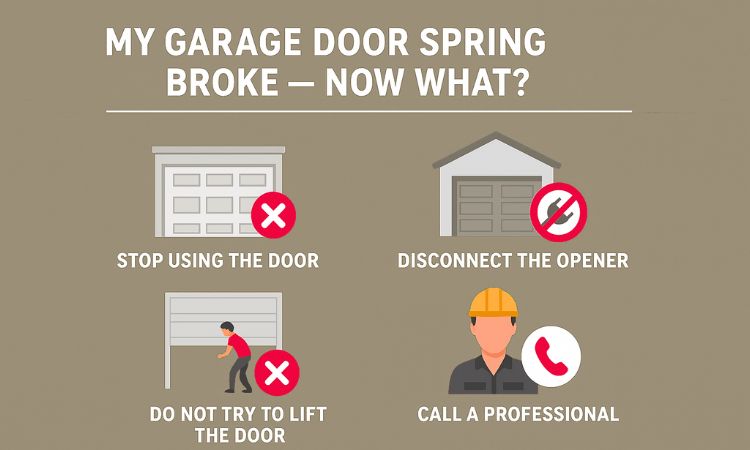
Upon completing your inspection, avoid using the door until repairs are made if you’ve confirmed a broken spring.
Can you open a garage door with a broken spring?
The short answer is technically yes, nevertheless, you should not attempt to open a garage door with a broken spring. Garage doors typically weigh between 150-500 pounds, making them extremely dangerous to manipulate without properly functioning springs.
Despite the temptation to force the door open, doing so carries significant risks:
- Severe injury potential – Broken springs can cause serious injuries including cuts, bruises, or broken bones. At least 2,000 people in the U.S. are injured yearly attempting to repair springs and cables.
- Damage to your opener – Using your automatic opener with broken springs strains the motor, potentially burning it out, stripping gears, or ripping the operator bracket from your door.
- Additional door damage – Forcing operation can damage tracks, rollers, cables, and the door panels themselves.
If you absolutely must access your garage temporarily, disengage the opener by pulling the red emergency release cord while the door is closed. Recruit at least one helper, wear sturdy footwear, safety goggles and gloves. Lift slowly from both sides keeping the door level.
Subsequently, secure the open door with locking pliers clamped onto the track just below the bottom roller.
Ultimately, the wisest course remains contacting a professional garage door technician, as spring replacement requires specialized tools and expertise .
Conclusion
Dealing with a broken garage door spring certainly ranks among the most frustrating household emergencies many homeowners face. Throughout this guide, we’ve explored how to identify the telltale signs of spring failure – from that startling bang to the suddenly heavy door that refuses to budge. Additionally, we’ve covered the critical safety precautions needed when inspecting your door system and the significant risks associated with attempting DIY repairs.
While you might feel tempted to force your garage door open or attempt repairs yourself, the dangers far outweigh any potential cost savings. Garage door springs store tremendous energy and can cause serious injuries when mishandled. Therefore, contacting a qualified garage door technician remains your safest option. These professionals possess specialized tools and training to replace springs correctly, whether you need the more affordable extension springs or the pricier torsion spring system.
Remember that safety should always be your primary concern when facing this common household issue. Though garage door springs eventually fail in most homes, proper professional replacement ensures your door system will function safely and reliably for another 7-12 years. Until a professional arrives, keep children away from the door, avoid using your automatic opener, and follow the temporary access guidelines we’ve outlined if absolutely necessary. This cautious approach protects both your family and your property from unnecessary damage.
Key Takeaways
When your garage door spring breaks, safety should be your top priority while you navigate this common household emergency that affects most homeowners within 7-12 years.
- Recognize the warning signs early: Listen for loud bangs, check for visible gaps in springs, and notice if your door feels extremely heavy or won’t lift properly.
- Never attempt DIY repairs or force operation: Broken springs store dangerous energy and can cause serious injuries, while forcing the door can damage your opener motor.
- Safely inspect without touching: Disconnect your opener and try manual lifting – a working door should require less than 20 pounds of force to lift.
- Call a professional immediately: Garage door technicians have specialized tools and training to safely replace springs, preventing the 2,000+ annual injuries from DIY attempts.
- Secure temporary access carefully: If you must open the door, use helpers, wear safety gear, and clamp locking pliers on tracks to secure the open position.
Professional spring replacement ensures your garage door system will function safely for another 7-12 years, making it worth the investment over risky DIY attempts that could result in injury or costly additional damage.
FAQs
Q1. How can I tell if my garage door spring is broken?
Look for signs like a loud bang from the garage, difficulty opening the door manually, the door appearing crooked or misaligned, or the door slamming shut quickly. You may also notice a visible gap in the torsion spring or a hanging extension spring.
Q2. Is it safe to open a garage door with a broken spring?
It’s not recommended to open a garage door with a broken spring. Doing so can be dangerous and may cause injury or further damage to the door and opener. If absolutely necessary, disengage the opener and carefully lift the door manually with help from others, but it’s best to wait for professional repair.
Q3. How much does it typically cost to replace a garage door spring?
The cost of replacing a garage door spring can vary depending on your location and the type of spring. Generally, you can expect to pay between $120 and $350 for professional replacement, including materials and labor. Torsion springs tend to be more expensive than extension springs.
Q4. Can I replace the garage door spring myself?
While it’s possible to replace extension springs yourself if you’re very handy, it’s strongly recommended to hire a professional for torsion spring replacement. Garage door springs are under high tension and can cause serious injury if not handled properly. Professional technicians have the necessary tools and expertise to safely replace springs.
Q5. How long do garage door springs typically last?
Garage door springs usually last between 7 to 12 years, depending on usage and quality. Torsion springs tend to last slightly longer, typically 8 to 15 years. Regular maintenance and proper usage can help extend the lifespan of your garage door springs.