🏠 Introduction
Your garage door is more than just a convenience — it’s a critical part of your home’s security, comfort, and daily routine. With frequent usage and exposure to weather elements, components can wear down over time, leading to costly repairs or unsafe operation if left unchecked. That’s where a monthly garage door maintenance checklist becomes essential.
Regular maintenance helps you catch emerging issues before they become serious problems — prolonging the life of your door, keeping your family safe, and ensuring smooth functionality all year round. This 2026 guide breaks down what to inspect monthly, why it’s important, and when to call professional help.
🛠 Why Monthly Garage Door Maintenance Matters
Garage doors are complex mechanical systems with multiple moving parts, including springs, cables, rollers, tracks, sensors, and openers. Over time, vibration and usage loosen hardware, cause friction, and can lead to malfunction if ignored. Regular monthly checks help:
- Prevent unexpected breakdowns
- Improve door performance and quiet operation
- Keep safety features working properly
- Extend the lifespan of the entire system
- Reduce long-term repair costs
Maintenance is especially important in environments like Queens, NY, where seasonal weather changes can impact door performance.
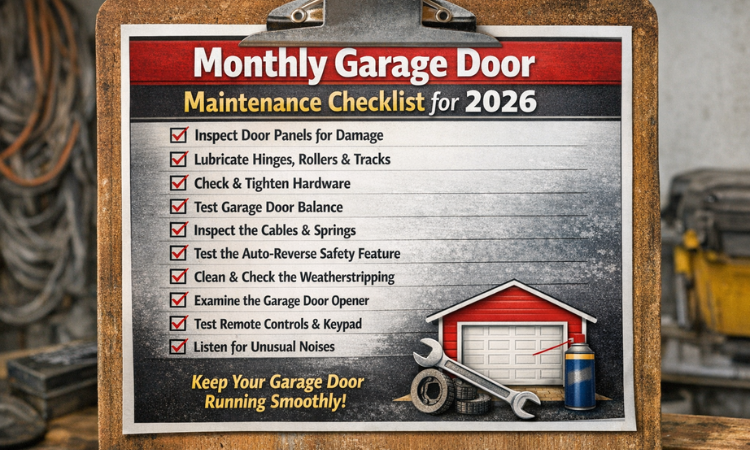
📅 Monthly Garage Door Maintenance Checklist for 2026
Below is a practical and easy-to-follow checklist you can complete once a month — most tasks take only 10–20 minutes!
1. Visual Inspection of Door Components
Start with a visual sweep of your garage door and frame:
✔ Panels & Surface: Look for dents, rust, or peeling paint. Clean debris to prevent corrosion.
✔ Rollers & Tracks: Ensure the rollers move freely and tracks are free from dirt or obstructions.
✔ Springs & Cables: Check for signs of wear, fraying, or rust. Do not attempt spring adjustments yourself — springs are under high tension.
✔ Weatherstripping: Examine the bottom seal and side weather seals for gaps or cracks that could let air or pests in.
2. Test Door Balance
A well-balanced door should stay halfway open when disconnecting the automatic opener. If it drifts up or down, tension issues with springs may exist — a professional should evaluate this.
Why it matters: Unbalanced doors put extra strain on your opener and can lead to premature failure or unsafe operation.
3. Check Safety Sensor Operation
Modern garage doors have two photo-eye sensors near the bottom tracks that stop the door from closing if something blocks the path.
✔ Place an object (like a cardboard box or piece of wood) in the sensor path.
✔ The door should reverse when obstructed.
✔ If it doesn’t, clean the lenses and realign the sensors.
Safety tip: This test helps prevent accidents involving pets, children, and objects left in the garage doorway.
4. Inspect and Test Auto-Reverse Feature
Another key safety mechanism is the auto-reverse system.
✔ Set a 2×4 block flat on the floor under the garage door path.
✔ When closing, the door should reverse immediately when touching the block.
✔ Failure to reverse means the system isn’t working — call a technician.
This prevents entrapment and serious injuries.
5. Lubricate Moving Parts
Lubrication is essential to reducing wear and noise:
✔ Apply a silicone-based garage door lubricant to:
- Hinges
- Rollers
- Bearing plates
- Spring coils
✔ Avoid heavy grease and stay away from tracks — grease attracts dust and debris.
Monthly lubrication tip: This keeps parts moving smoothly and reduces strain on the motor.
🔗 How to Lubricate Your Garage Door for Smooth Operation?
6. Hardware Tightening
Over time, bolts and screws loosen due to vibration.
✔ Use a socket or adjustable wrench to tighten all hardware:
- Hinges
- Brackets
- Track fasteners
✔ Avoid over-tightening — this can damage components.
Loose hardware can lead to misalignment and noisy operation.
7. Listen for Unusual Noises
Operate the door a few times and listen closely:
✔ Grinding
✔ Clunking
✔ Squeaking
✔ Rattling
Noise often indicates lubrication issues, worn rollers, or misaligned tracks. Persistent noise means it’s time for a closer inspection or professional service.
🔗 The Dangers of Ignoring a Noisy Garage Door
8. Clean Door Panels
While not mechanical, cleaning:
✔ Removes grime
✔ Prevents rust
✔ Helps you spot early damage
Use mild soap and water to wash panels and wipe down sensors and tracks.
When Professional Inspection Is Needed
While most monthly tasks are DIY-friendly, some issues require a trained technician:
🔧 Call a Pro If You Notice:
- Broken or frayed cables
- Bent or misaligned tracks
- Door doesn’t stay balanced
- Safety sensors malfunction
- Strange noises that persist
- Opener struggles to lift the door
Garage door springs and cables are dangerous to adjust on your own because of the extreme tension involved. Always hire a licensed technician when in doubt.
Conclusion
A monthly garage door maintenance checklist isn’t just a helpful suggestion — it’s a proactive way to protect your home, family, and investment. With just a few minutes each month, you can:
✔ Detect problems early
✔ Keep your door operating smoothly
✔ Boost safety and reliability
✔ Save on costly repairs over time
If you discover anything beyond your comfort level during your monthly checks, Garage Door Repair Queens NY is here to help. Our trusted technicians provide professional maintenance, fast repairs, and expert servicing throughout Queens, Long Island, and NYC. Regular attention now means a dependable garage door for the rest of 2026 and beyond.

 How to Get the Bes..