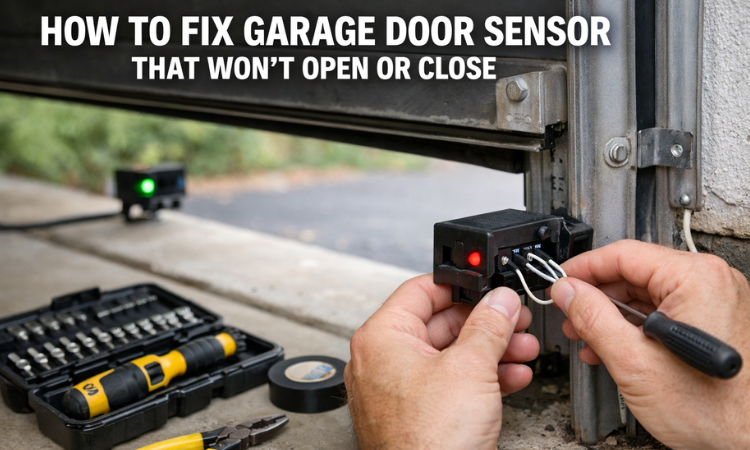
A garage door that refuses to open or close because of a malfunctioning sensor can be frustrating and disrupt your day. The sensors on your garage door are essential safety components designed to prevent the door from closing on objects, pets, or people. When these sensors fail, the door might not respond at all. In this post, we’ll walk through practical steps to fix garage door sensor that won’t open or close and explain when you should contact a professional technician.
What Garage Door Sensors Do
Garage door sensors are photo‑electric eyes installed near the ground on either side of your garage entrance. They send a beam between each other to detect obstructions. If the beam is broken or misaligned, the garage door opener may assume there’s something in the way and refuse to close—this is a safety feature built into most automatic garage door systems.
Common Reasons Your Garage Door Sensor Won’t Open or Close
Before fixing the sensor, it helps to understand why it’s malfunctioning. The most common causes include:
- Sensor misalignment
- Dirty or blocked sensors
- Loose or damaged wiring
- Sunlight interference
- Faulty sensors
Step‑by‑Step: How to Fix Garage Door Sensor That Won’t Open or Close
1. Check for Obstructions
Start with the simplest possible cause. Inspect the area around both sensors:
- Remove objects, debris, or tools that might be blocking the sensor beams.
- Make sure nothing is lying directly between the sensors on the floor or ground.
Often, simply clearing debris restores normal function.
2. Clean the Sensor Lenses
Dirt, dust, spider webs, or smudges on the sensor lenses can prevent the beam from passing between sensors.
How to clean:
- Use a soft, dry cloth to wipe each sensor lens.
- Avoid harsh chemicals that might scratch or damage the surface.
- After cleaning, test the garage door to see if it opens or closes normally.
3. Ensure Sensors Are Properly Aligned
Garage door sensors must face each other directly:
- Check that both sensors are level and aimed at one another.
- The indicator light on each sensor should be steady (not flickering). Typically, a steady green and a steady red light means proper alignment; a blinking light suggests misalignment.
- Gently adjust the sensor brackets so both eyes face directly toward each other.
Once aligned, test the door again.
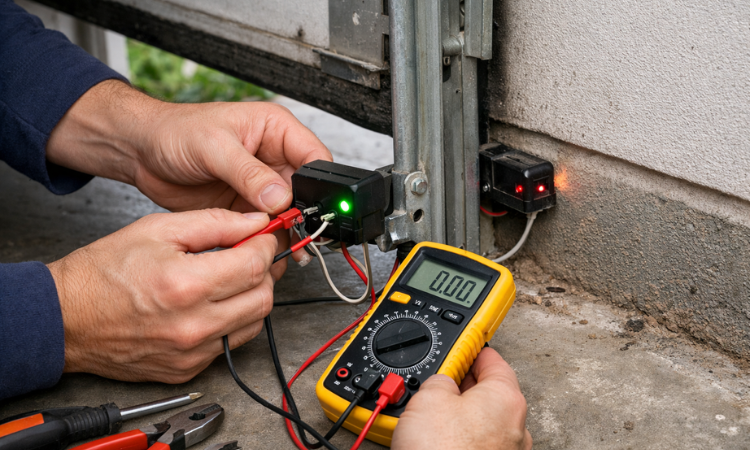
4. Inspect Sensor Wiring
Loose, frayed, or damaged wires can interrupt the signal from the sensor to the opener.
What to look for:
- Wires pulled loose from their terminals
- Cuts, nicks, or exposed parts of the wire
- Damaged insulation
If you find any damaged wiring:
- Turn off the garage door opener power first.
- Tighten loose connections or replace damaged wires.
- If you’re not comfortable handling wiring, it’s safer to call a technician.
5. Reduce Sunlight Interference
Bright sunlight shining directly into a sensor can confuse it and prevent it from working properly.
How to reduce the issue:
- Slightly reposition the sensor shield or shade the sensor with a small overhang.
- Avoid pointing the sensor directly at reflective surfaces that can redirect sunlight into the lens.
6. Reset Your Garage Door Opener
In some cases, resetting the opener can clear programming errors caused by sensor issues.
Common reset steps:
- Unplug the garage door opener from the power source.
- Wait 30 seconds.
- Plug the opener back in and test the door.
Refer to your garage door opener’s manual for model‑specific reset instructions.
7. Replace Faulty Sensors
If after cleaning, aligning, and inspecting wiring your sensors still won’t allow the door to open or close, the sensors themselves may be faulty.
Signs of a faulty sensor:
- No indicator lights
- Lights that remain off even after alignment
- Physical damage to the sensor housing
Sensors are relatively inexpensive but require proper installation. If you suspect a bad sensor, it’s best to have a trained technician replace it.
When to Call Professional Garage Door Repair in Queens
While many minor sensor issues can be fixed with basic DIY steps, some situations call for professional help:
- Persistent misalignment after adjustments
- Broken or severely damaged sensors
- Wiring issues that require repair or replacement
- Sensors that need calibration or accurate positioning
- Other garage door problems (springs, tracks, opener motor)
At Garage Door Repair Queens, our technicians have the tools and experience to fix complex sensor problems fast and safely. We ensure proper alignment, secure wiring, and reliable operation so your garage door opens and closes as it should.
Tips to Prevent Future Sensor Problems
To reduce the likelihood of future sensor issues, follow these preventative tips:
- Regularly clean sensor lenses (every 1–2 months)
- Inspect sensor alignment during seasonal changes
- Clear debris from around sensors
- Schedule annual garage door maintenance
Routine care helps maintain safety and prevents unexpected sensor failures.
Conclusion
A garage door sensor that won’t open or close doesn’t always mean a major repair—often, a little cleaning and realignment will restore normal operation. However, if the issue persists or you’re unsure how to proceed, a trained technician can quickly diagnose and fix the problem. For reliable garage door sensor repair in Queens, contact Queens NY Garage Door Repair through the form or call our service line.

 How to Align Garag..