Garage door sensors are critical safety components that prevent accidents and property damage. Whether you manage a residential property, operate a commercial facility, or run an automotive shop, knowing how to fix garage door sen sor problems quickly can save time, money, and prevent safety hazards. This comprehensive guide provides professional solutions to the most common sensor issues affecting homeowners, businesses, and commercial operations.
Understanding Garage Door Sensor Technology
Before learning how to fix garage door sensor malfunctions, it’s essential to understand how these safety devices work. Garage door sensors use photoelectric technology, creating an invisible infrared beam across the door opening. When this beam is interrupted during the closing cycle, the door immediately stops and reverses to prevent crushing injuries or property damage.
For commercial properties and automotive shops with heavy daily usage, sensor reliability is even more critical. Multiple vehicles entering and exiting throughout the day place additional stress on sensor systems, making regular maintenance and quick repairs essential for business continuity.
Common Sensor Problems: Residential vs. Commercial
While the basic principles of how to fix garage door sensor issues remain consistent, the challenges differ between residential and commercial applications. Homeowners typically face problems from weather exposure, accumulated dirt, or accidental bumps from vehicles or lawn equipment. The most common residential issue is misalignment caused by impacts or vibration over time.
Commercial facilities and automotive shops encounter more complex challenges. High-traffic environments generate more dust, oil mist, and exhaust residue that coat sensor lenses. Multiple daily operations increase wear on mounting brackets, and the constant opening and closing cycles can loosen electrical connections. Additionally, shops with multiple bay doors need systematic approaches to sensor maintenance across all access points.
Step 1: Diagnosing Sensor Problems
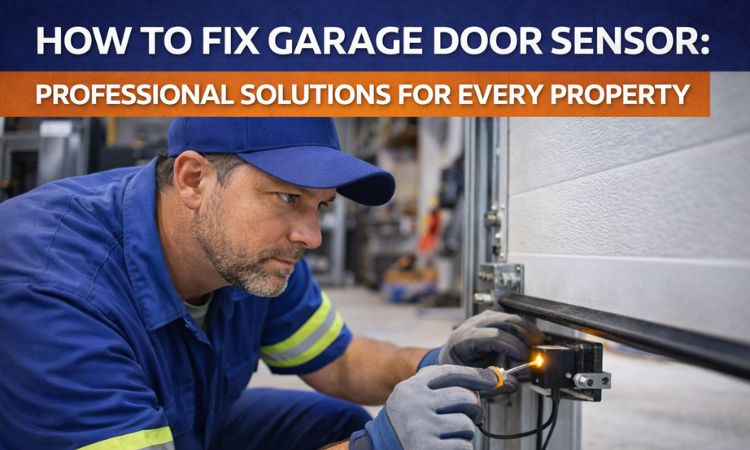
The first step in how to fix garage door sensor issues is accurate diagnosis. Most sensors feature LED indicator lights that communicate their operational status. A solid green light on both sensors typically indicates proper alignment and function. If one sensor shows a blinking or red light, this signals a problem with beam connection, usually from misalignment or obstruction.
For commercial operations, implement a systematic diagnostic checklist.
Check all indicator lights first, inspect for visible obstructions or damage, test door response, and verify wiring connections. This methodical approach helps maintenance teams quickly identify problems across multiple door systems without wasting time on trial-and-error repairs.
Step 2: Cleaning and Clearing Obstructions
The simplest solution for how to fix garage door sensor problems is often the most overlooked: cleaning. Dirt, dust, spider webs, and grime on sensor lenses block the infrared beam just as effectively as physical obstructions. For residential applications, monthly cleaning with a soft microfiber cloth prevents most sensor issues.
Commercial and shop environments require more frequent attention.
In automotive facilities, airborne oil particles and exhaust residue create a film on lenses within days. Establish a weekly cleaning schedule using appropriate lens cleaners. Never use harsh chemicals or abrasive materials that could scratch sensor surfaces. For shops with multiple bays, assign sensor maintenance to specific team members to ensure consistency.
Step 3: Realigning Misaligned Sensors
Misalignment is the most frequent reason property owners and facility managers need to know how to fix garage door sensor systems. Sensors must face each other directly at the same height with no vertical or horizontal deviation. Even a shift of a few millimeters can break the infrared connection.
To realign sensors, loosen the mounting brackets slightly, ensuring sensors are level both vertically and horizontally.
Use a carpenter’s level for precision. Adjust sensors until both indicator lights show solid connections, then carefully tighten mounting hardware without shifting sensor position. In commercial settings with heavy door usage, consider upgrading to reinforced mounting brackets that resist vibration-induced misalignment.
Step 4: Addressing Wiring Issues
Understanding how to fix garage door sensor wiring problems requires basic electrical knowledge and safety precautions. Always disconnect power before inspecting or repairing wiring. Look for loose connections at terminal points, damaged insulation, or corroded wire contacts. Commercial facilities should run sensor wires through protective conduit in high-traffic areas where vehicles or equipment might contact them. Label all wiring clearly to speed troubleshooting in multi-door facilities.
Safety first: always disconnect power before handling wires.
Advanced Solutions: Environmental Challenges
Certain environmental factors require specialized knowledge of how to fix garage door sensor interference. Direct sunlight can overwhelm sensor infrared beams during specific times of day. Install small hoods or visors above sensors to shade them from direct sun without blocking the beam path. Commercial facilities may also face interference from LED lighting, wireless routers, or radio frequency devices that disrupt sensor signals. Relocating wireless equipment or shielding sensor wiring can resolve these intermittent issues.
When to Replace Rather Than Repair
Knowing how to fix garage door sensor problems also means recognizing when replacement is more cost-effective than continued repairs. Sensors typically last 10-15 years, but harsh environments or heavy usage accelerates wear. If sensors require frequent realignment, show physical damage, or fail to power on despite proper wiring, replacement becomes necessary.
For commercial operations, consider preventive replacement on a schedule rather than waiting for failure.
Replacing sensors every 8-10 years in high-use facilities prevents unexpected downtime. Modern sensors offer improved durability, better sunlight rejection, and enhanced reliability—upgrades that benefit busy commercial environments.
Preventive Maintenance Programs
The best approach to how to fix garage door sensor issues is preventing them through systematic maintenance. Homeowners should inspect sensors monthly, clean lenses, check alignment, and verify proper operation by testing the safety reverse function. This simple routine prevents 90% of common sensor problems.
Commercial facilities require formal maintenance programs.
Create checklists for daily visual inspections, weekly cleaning, monthly alignment verification, and quarterly comprehensive testing. Document all maintenance activities to track patterns and predict potential failures. For multi-bay facilities, rotate maintenance schedules to avoid disrupting operations across all doors simultaneously.
Safety Considerations and Code Compliance
Understanding how to fix garage door sensor systems includes maintaining safety compliance. Federal regulations mandate functioning safety sensors on all automatic garage doors installed since 1993. For residential properties, this protects family members, particularly children. For commercial operations, proper sensor function is essential for liability protection and insurance compliance.
Never bypass or disable sensors, even temporarily.
If sensors malfunction, repair them immediately or restrict door access until repairs are complete. Commercial facilities should establish protocols for marking non-functional doors and providing alternative access during repairs. Document all safety-related maintenance for insurance and regulatory purposes.
Professional Service vs. DIY Repairs
While many aspects of how to fix garage door sensor problems are manageable for property owners, some situations require professional expertise. Complex wiring issues, sensor replacement requiring opener programming, or persistent problems despite proper troubleshooting warrant professional service. Homeowners comfortable with basic tools can handle most sensor cleaning, alignment, and minor wiring repairs, but should seek professional help when problems persist after systematic troubleshooting.
Know your limits – safety and precision matter.
Conclusion: Mastering Sensor Maintenance
Understanding how to fix garage door sensor issues empowers homeowners, facility managers, and shop operators to maintain safe, reliable door operation. Regular maintenance prevents most problems, while systematic troubleshooting resolves issues quickly when they occur. Whether managing a single residential garage or multiple commercial bay doors, applying these professional techniques ensures sensors function properly, protecting people and property while minimizing downtime and repair costs.
Immediate action prevents bigger issues
Test your sensors monthly. Clean lenses gently. Listen for unusual opener behavior. A few minutes of preventive care can save hundreds in emergency repairs.
Queens NY Garage Door Repair – sensor experts 24/7
If you encounter persistent sensor problems or need professional diagnosis, our certified technicians provide same-day service throughout Queens and all NYC boroughs. We handle residential, commercial, and automotive shop sensor systems with precision and speed.
Call (718) 755-5985 for expert sensor service
Upfront pricing, licensed, insured. We serve Astoria, Bayside, Flushing, Long Island City, Forest Hills, Jackson Heights, and all Queens neighborhoods.

 How to Align Garag..