Jump to Your Problem
Door won’t open at all
Stuck door, won’t budge
Broken spring (heard a loud bang)
Loud bang, heavy door
Opener running but door not moving
Motor runs, door doesn’t move
Door is super loud
Squeaking, grinding, rattling
Door came off the track
Emergency situation
Remote stopped working
Remote won’t operate door
Door goes back up right after closing
Closes then opens again
Your Door Won’t Open (Or Won’t Close)
Medium RiskThis is the worst because you’re either stuck inside your garage or can’t secure it. Here’s what’s usually going on:
The spring broke
If your door won’t budge AT ALL, or only opens a few inches, your spring probably snapped. You might’ve heard a really loud BANG recently—like a gunshot or a car backfiring. That was your spring breaking.
What to do: Call someone
Seriously, don’t mess with broken springs. I’ll explain why in the next section, but just trust me on this one. It’s dangerous.
How much: Usually $150-$350 depending on where you live and your door size. In big cities like New York, Chicago, LA, expect closer to $200-$400.Someone pulled the red handle
There’s a red emergency release cord hanging from your opener. If someone pulled it (maybe during a power outage?), the opener disconnected from the door.
What to do
With the door closed, pull the handle toward the door (not straight down). The trolley should click back into place. Then try your opener again.
Cost: FreeDead batteries in your remote
I know, I know. But you’d be surprised how often this is the problem.
What to do
Pop in new batteries. If the wall button inside works but your remote doesn’t, this is probably it.
Cost: $3 for batteriesSomething’s blocking the sensors
Those little sensors near the floor on both sides of your door? If something’s blocking them or they’re dirty, your door won’t close.
What to do
- Make sure nothing’s in front of them (kids’ toys, boxes, whatever)
- Wipe them off with your shirt or a paper towel
- Check if the little LED lights are on (one on each sensor)
- If one’s blinking, they’re not aligned—gently move one until both lights stay solid
The manual lock is engaged
Some doors have a slide lock that goes into the track. If it’s engaged, the opener can’t move the door.
What to do
Look for a horizontal bar that slides into holes in the track. Slide it out.
Cost: FreeBroken Springs (The Most Common Problem)
High RiskSprings are what lift your garage door. Your opener doesn’t actually lift the door—it just pulls a balanced door up and down. When the spring breaks, you’ve got a 200-300 pound door that won’t move.
Springs usually last 7-10 years if you use your garage door twice a day. They just wear out eventually. It’s not usually because you did something wrong.
How to know your spring broke
- Heard a super loud BANG from the garage (even if it was a few days ago)
- Door absolutely will not open, or opens just 6 inches and stops
- Door feels impossibly heavy when you try lifting it by hand
- You can literally see a gap in the spring coil above the door
- Door is hanging crooked
- Cables are hanging loose
Why springs break
- They’re just old and worn out (most common)
- Rust, especially if you live near the ocean or in humid areas
- Not enough lubrication over the years
- Big temperature swings (if you live somewhere with cold winters, this accelerates wear)
Can you fix this yourself? No. Please don’t try.
I’m not being dramatic here. Every year, people end up in the emergency room from trying to replace garage door springs themselves. These things are under 200+ pounds of tension—enough to break bones or worse.
YouTube videos make it look doable, but what they don’t show you is:
- All the things that can go wrong
- The specialized tools you need (easily $200+ that you’ll never use again)
- How easy it is to order the wrong spring and not realize it
- What happens when you lose control of a spring under tension
Just call someone. It’s not worth the risk.
What it costs
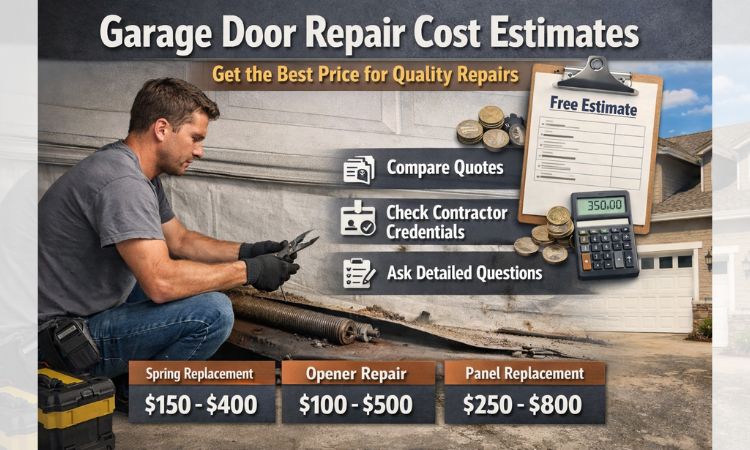
Nationally, most companies charge $150-$350 for spring replacement. Factors that affect price:
- Single door vs. double door
- Standard springs vs. heavy-duty springs
- Where you live (higher in cities)
In New York and other major metros, you’re looking at $200-$400 because labor costs more there.
Most techs can do this in under an hour. They’ll remove the broken spring safely, install new ones, balance your door, and check the cables.
Opener Problems (It Runs But Nothing Happens)
Low RiskYour opener is basically a motor that pulls your door along the track. When it stops working right, here’s what’s usually happening:
Motor runs, door doesn’t move
You hit the button, you hear the motor running, but the door just sits there.
What’s wrong: The gear inside the opener is stripped. This happens a lot with older Craftsman and Chamberlain openers.
Fix
Someone needs to open up the opener and replace the drive gear. If you’re handy, you can do this yourself (the part is like $20), but most people just call someone.
Usually costs $150-250Grinding or clicking noises
What’s wrong: Either gears inside are wearing out, or your chain/belt is too loose.
Fix
First, check if your chain is sagging. Stand under it—there should be about 1/2 inch of play. If it’s hanging way lower, tighten it according to your opener’s manual. If that doesn’t help, internal gears probably need replacing.
Door goes up but won’t go down, or reverses right away
What’s wrong: 99% of the time, this is your safety sensors.
Fix
- Clean both sensor eyes with your shirt
- Check if both have steady lights (not blinking)
- Make sure they’re aligned—point them directly at each other
- Check for spider webs or anything blocking them
If that doesn’t work, the sensors might be bad. They’re usually $60-80 for the pair.
Remote works but wall button doesn’t (or vice versa)
If remote works, button doesn’t:
- Check the wires going from the button to the opener
- Just replace the wall button—they’re cheap ($10-15)
If button works, remote doesn’t:
- New batteries first (I know, obvious, but still)
- Try reprogramming the remote (every brand is different, check your manual)
- Might need a new remote ($30-50)
Noisy Garage Door (Sounds Like a Freight Train)
Low RiskA loud garage door isn’t just annoying. It usually means something’s wearing out that’s going to break soon.
Squeaking or screeching
What’s wrong: Things need lubrication.
Fix
Get some garage door lubricant (not WD-40—that’s a degreaser, not a lubricant). Spray it on:
- All the hinges
- Rollers
- Springs
- Bearings
- Top of the chain/belt on your opener
Takes 10 minutes, makes a huge difference. Do this twice a year.
What to buy: Liquid silicone spray works great. White lithium grease lasts longer but is messier.
Grinding or scraping
What’s wrong: Rollers are worn out or tracks are bent.
Fix
Look at your rollers. If they’re cracked or the wheels don’t spin freely, replace them. Nylon rollers are quieter than metal ones. They’re about $15 each, pretty easy to replace yourself. There are tutorials on YouTube that are actually safe to follow for this one.
Loud rattling
What’s wrong: Nuts and bolts have loosened up from vibration.
Fix
Go around with a socket wrench and tighten everything. Takes 20 minutes. Also check that your opener’s chain or belt isn’t too loose.
Door Came Off the Track
High RiskThis is an emergency. Stop using the door immediately.
An off-track door can fall without warning. It’s heavy enough to seriously hurt someone or destroy your car.
How it happens
- You hit it with your car (happens more than you’d think)
- A roller broke and the door jumped the track
- Cable broke and the door went crooked
What to do
- Don’t try to open or close it
- Pull the emergency release (red cord) so the opener isn’t connected
- Call a professional
This isn’t a DIY repair. The door needs to be safely secured, properly lifted back into the tracks, and everything needs to be checked for damage.
Cost: Usually $200-400 depending on how bad it is and if anything else needs replacing.Remote or Keypad Stopped Working
Low RiskThis one’s usually pretty easy.
Try this order:
1. New batteries
Works about 70% of the time. Use fresh ones.
2. Get closer
Stand right under the opener and try it. If it works close but not from the driveway, either your remote’s signal is weak or the opener’s antenna is damaged.
3. Reprogram it
Every opener brand is different, but generally:
- Find the “learn” button on the opener motor
- Press and hold it
- Press your remote button
- Opener should beep or flash
Check your opener’s manual or Google your specific model.
4. Check for interference
LED light bulbs can mess with garage door remotes. Seriously. Try switching to regular bulbs in your garage.
5. Buy a new remote
If nothing works, just get a new one. Universal remotes work with most openers and cost $25-40 on Amazon.
Door Opens Then Immediately Closes
Low RiskThis is almost always your safety sensors thinking something’s in the way.
Those sensors near the floor are there to prevent the door from closing on a kid, pet, or whatever. If they detect anything (or think they do), the door reverses.
Check these things
- Clean the sensor lenses—they get dusty
- Make sure they’re aligned (both should have solid LED lights, not blinking)
- Look for spider webs between them
- Make sure nothing’s actually in the doorway
- Check if the wiring is damaged (maybe you were doing yard work and accidentally cut or nicked a wire?)
If everything looks good but it’s still doing this, one of the sensors is probably going bad. They need to be replaced ($80-150 for the pair).
When You Actually Need to Call Someone
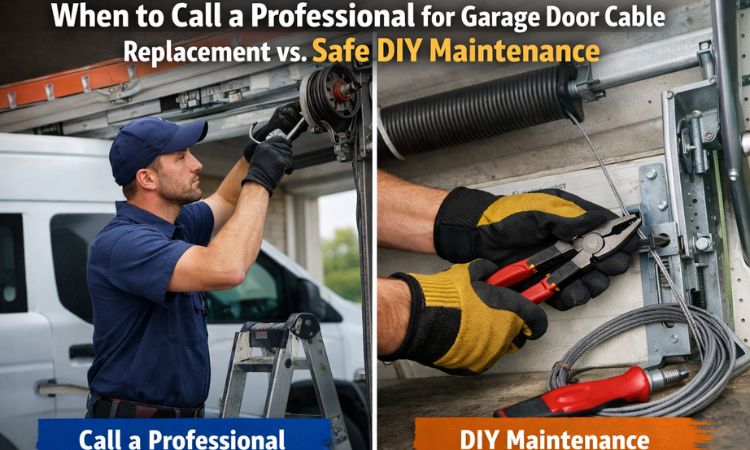
Safety InfoSome stuff you can handle. Some stuff will land you in the hospital if you try. Here’s the breakdown:
Always call a pro for:
- Broken springs → Dangerous, specialized tools required
- Broken cables → Under high tension, can snap back and hurt you
- Door off track → Can fall unexpectedly
- Major damage → Bent tracks, damaged panels, structural stuff
- New opener installation → Possible DIY but most people mess something up
Totally fine to do yourself:
- Replacing remote batteries
- Cleaning and aligning sensors
- Lubricating moving parts
- Tightening loose bolts
- Replacing weatherstripping
- Reconnecting the opener after emergency release
How to find a good repair company:
- Check Google reviews (shoot for 4+ stars)
- Get quotes from 2-3 companies for big repairs
- Ask what warranty they offer
- Make sure they’re licensed and insured
- Get the price BEFORE they start
What Stuff Costs (roughly)
National AveragesThese are national averages. Add 20-30% if you’re in a major city.
- Spring replacement: $150-$350
- Opener repair: $150-$300
- New opener: $300-$500
- Cable replacement: $150-$300
- New rollers: $100-$200
- Full tune-up: $75-$150
- Fix off-track door: $200-$400
How to Avoid Most of These Problems
PreventionMost garage door problems are preventable. Spend 30 minutes twice a year doing this:
Every 6 months:
- Spray everything with lubricant (hinges, rollers, springs, chain)
- Tighten all the bolts
- Check for rust on springs and cables
- Test the door balance (disconnect the opener, lift the door to about chest height—it should stay there. If it falls or shoots up, it’s out of balance)
Once a month (takes 2 minutes):
- Test the auto-reverse (put something in the doorway and make sure the door reverses when it hits it)
- Clean the sensors
- Listen for weird noises
That’s it. Do these simple things and you’ll avoid 90% of problems.
Different Parts of the Country, Different Problems
Climate EffectsWhere you live affects what breaks and how often.
Cold places (Northeast, Midwest, Mountains)
Problems you’ll see:
- Springs break more often from temperature swings
- Door freezes to the ground in winter
- Tracks get ice buildup
- Lubricant gets thick and sticky in extreme cold
What helps:
- Use cold-weather lubricant
- Keep a scraper handy for ice
- Consider upgrading to better springs
Humid places (Southeast, Gulf Coast, anywhere coastal)
Problems you’ll see:
- Everything rusts faster
- Salt air eats through metal (especially near the ocean)
- Wooden doors warp and rot
- Mold grows on wooden doors
What helps:
- Lubricate more often
- Use stainless steel hardware if replacing anything
- Consider composite or steel doors instead of wood
Hot, dry places (Southwest, desert areas)
Problems you’ll see:
- Weatherstripping dries out and cracks
- Wooden doors warp
- Dust gets in everything
- Sun damage on doors and openers
What helps:
- Replace weatherstripping regularly
- Keep tracks clean
- Still need to lubricate even though it’s dry
Hurricane areas (Florida, Gulf Coast, Atlantic Coast)
Special consideration:
- Need hurricane-rated doors with reinforced tracks
- Should have wind load bracing
- Make sure door works BEFORE hurricane season
- Keep manual release accessible
Summary
Most garage door problems fall into a few categories: broken springs, opener issues, misaligned sensors, or stuff wearing out from lack of maintenance.
Some fixes are easy enough to do yourself. Others—especially anything with springs or cables—are legitimately dangerous and need a professional.
A little regular maintenance (lubrication and tightening bolts twice a year) prevents most problems.
When you do need help, take time to find a decent company with good reviews and upfront pricing. Don’t let someone talk you into a new door if yours just needs a repair.
Need Help?
Contact InformationIn New York?
Queens NY Garage Door Repair
We’re Queens NY Garage Door Repair. We’ve been doing this since 2000, and we cover Queens, Brooklyn, Manhattan, the Bronx, Staten Island, Long Island, and Westchester. Call or text us at (718) 755-5985 for same-day service.
Somewhere else in the US?
Finding Local Help
Search “garage door repair near me” and look for companies with good reviews (4+ stars), upfront pricing, and proper licensing. Avoid anyone who pushes for a new door when all you need is a simple repair.