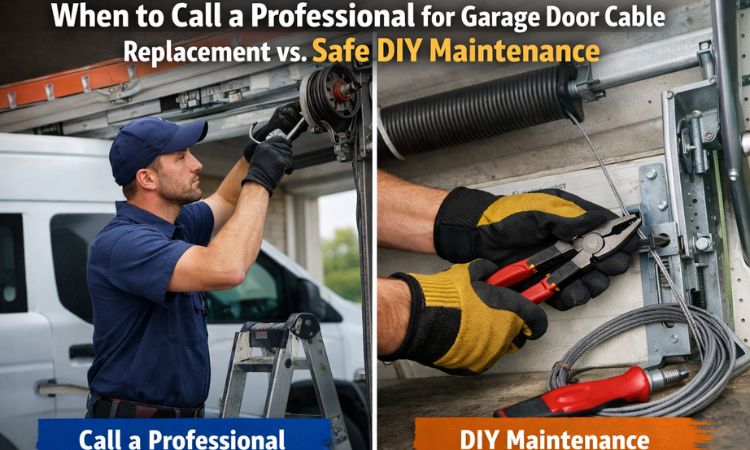
Understanding the difference between tasks you can safely handle yourself and those requiring professional expertise is crucial for maintaining your garage door system. While some maintenance activities are simple and safe for homeowners, Garage Door Cable Replacement should always be left to trained technicians due to the high tension involved and serious injury risks.
Why Professional Help is Essential
Cable replacement involves working with high-tension components that can cause severe injury if mishandled. Our professional technicians have:
- Specialized tools designed for safely releasing and adjusting cable tension
- Years of training in handling torsion and extension spring systems
- Expert knowledge of proper cable routing and tension requirements
- Full insurance and safety protocols to protect you and your property
Risks of DIY Cable Replacement
- Sudden release of stored tension causing serious injury
- Improper cable installation leading to door imbalance
- Damage to other garage door components
- Voiding manufacturer warranties
Professional-Only Tasks (Never DIY)
High-Tension Component Work
- Garage Door Cable Replacement (both torsion and extension cables)
- Spring replacement or adjustment
- Cable drum repair or replacement
- Tension adjustment on any spring system
Structural & Safety-Critical Repairs
- Track realignment requiring disassembly
- Opener motor replacement or internal repairs
- Door panel replacement on sectional doors
- Bottom bracket repair or replacement (under tension)
Safe DIY Maintenance Tasks
Regular Cleaning & Lubrication
What you can do safely:
- Clean tracks with a damp cloth to remove dirt and debris
- Apply silicone-based lubricant to rollers, hinges, and springs
- Wipe down weather stripping and apply rubber conditioner
- Clean photo-eye sensors with a soft, dry cloth
Recommended frequency: Every 3-6 months, or more often in dusty environments
Visual Inspections
Check for these warning signs monthly:
- Frayed or damaged cables (stop using and call us immediately)
- Worn rollers or hinges
- Loose hardware or mounting brackets
- Gaps in weather stripping
- Rust or corrosion on metal components
More Safe DIY Tasks
Tightening Loose Hardware
What you can do safely:
- Tighten roller brackets with a socket wrench
- Secure loose hinge screws
- Tighten track mounting brackets
- Check and tighten opener mounting hardware
Important: Never tighten or adjust bottom brackets, cable drums, or any hardware connected to the spring system.
Testing Safety Features
- Photo-eye sensor test: Place an object in the door’s path while closing. The door should reverse immediately.
- Auto-reverse test: Close the door and apply light upward pressure. The door should reverse direction.
- Manual release test: Pull the emergency release cord. The door should stay in position when partially opened.
Red Flags Requiring Immediate Professional Help
Stop using your garage door and contact us immediately if you notice:
Cable-Related Issues
- Visible fraying, rust, or damage to cables
- Cables hanging loose or off the drums
- Door operating unevenly or tilting to one side
- Snapping or popping sounds during operation
When you observe these signs, you need professional Garage Door Cable Replacement right away.
Spring Problems
- Door feels heavy when lifting manually
- Door won’t stay open in any position
- Visible gaps in torsion springs
- Springs appear stretched or deformed
Operational Concerns & Cost Analysis
Operational Warning Signs
- Door closes too quickly or slams shut
- Grinding or scraping noises during operation
- Door gets stuck or jams frequently
- Remote or wall switch becomes unresponsive
Professional Service Benefits
- Safety First: Trained technicians handle dangerous components safely
- Proper Repair: Cables installed with correct tension and alignment
- Warranty Protection: Professional repairs maintain manufacturer warranties
- Time Savings: 30-60 minutes vs. hours for DIY attempts
- Complete Inspection: We identify other potential issues during service
Recommended Maintenance Schedule
- Monthly: Visual inspections and safety feature tests
- Quarterly: Cleaning and lubrication
- Annually: Professional inspection and tune-up
- Every 5-7 years: Cable inspection and possible replacement
Need Professional Garage Door Service in Queens, NY?
Our certified technicians at Queens NY Garage Door Repair provide safe, reliable repairs with upfront pricing and quality workmanship. We serve all Queens neighborhoods and offer 24/7 emergency service with 1-hour response times.
Call Now: (718) 755-5985Today’s Offer: $75 Off Any Garage Door Repair | Open Saturday & Sunday
 How to Align Garag..