How Much Should Garage Door Repair Really Cost? Find Out Now

A functioning garage door is more than a convenience; it’s a matter of home security and safety. When it breaks, the immediate questions are often: “What’s wrong with it?” and “How much will this cost me?” Understanding the factors that determine garage door repair cost is essential for every homeowner. It empowers you to make informed decisions, budget effectively, and avoid overpaying for services.

This guide will break down everything you need to know about garage door repair costs. We’ll explore the various factors that influence pricing, from the type of repair to the parts used. By the end, you’ll have a clear picture of what to expect and how to find a fair price for a quality repair.

Factors That Influence Garage Door Repair Costs

The final bill for a garage door repair isn’t just a single number. It’s a combination of several key elements. Knowing these variables helps you understand why one quote might be different from another and what you’re actually paying for.

Type of Repair Needed

The most significant factor in your total garage door repair cost is the specific problem you’re facing. A minor adjustment will naturally cost less than a major component replacement. Some of the most common repairs include spring replacement, cable repair, opener issues, and panel replacement. Each of these jobs requires different parts and varying amounts of labor, directly affecting the final price.

Type of Garage Door

Not all garage doors are created equal. The material, size, and style of your door can influence repair costs. For example, a standard single-car steel door is often less expensive to repair than a custom-built wooden carriage house door. Materials like wood may require more specialized labor or harder-to-find parts, increasing the overall cost. Custom or oversized doors can also present unique challenges that add to the labor time and expense.

Location and Labor Costs

Where you live plays a role in what you’ll pay. Labor rates for skilled technicians vary significantly from one city to another. A repair in a major metropolitan area with a high cost of living will likely be more expensive than the same job in a smaller town. Reputable companies invest in training, insurance, and well-equipped vehicles for their technicians, and these operational costs are factored into their labor rates.

Quality of Replacement Parts

When a part needs to be replaced, you often have a choice between Original Equipment Manufacturer (OEM) parts and aftermarket alternatives. OEM parts are made by the original manufacturer of your garage door or opener and are guaranteed to fit and perform as intended. Aftermarket parts might be cheaper, but their quality and longevity can be inconsistent. Investing in high-quality parts may increase the initial garage door repair cost, but it can save you money on future repairs and provide better performance.

Average Garage Door Repair Costs

While exact prices vary, we can look at national averages to get a general idea of what to expect. This helps you determine if a quote you receive is in a reasonable range.

National Averages

Most homeowners spend between $150 and $400 for a garage door repair. However, this is a broad estimate. Let’s look at some typical costs for specific common jobs:

  • Spring Replacement: This is one of the most frequent repairs. You can expect the cost to be anywhere from $150 to $350. This usually includes both the springs and the labor.
  • Opener Repair: Issues with the motor, gears, or safety sensors can often be fixed. An opener repair typically runs between $100 and $300, depending on the part that needs replacement.
  • Cable Repair: Broken or frayed cables are a serious safety hazard. Replacing them usually costs between $150 and $200.

Remember, these are just averages. A complex job or a call for emergency service will increase the total.

Cost Differences by Region

As mentioned, your location matters. A garage door spring replacement in a place like New York or Los Angeles might be on the higher end of the scale, closer to $350 or more. In contrast, the same repair in a Midwestern suburb might be closer to the $150-$200 range. Always look for quotes from local, reputable companies to get an accurate sense of pricing in your area.

Cost of DIY Repairs vs. Hiring a Professional

Tackling a repair yourself might seem like a great way to save on labor costs. For very simple tasks, like lubricating moving parts, it can be. However, for most garage door repairs, the DIY route comes with hidden costs and significant risks.

Garage door systems, especially the springs, are under extreme tension and can cause serious injury or property damage if handled improperly. You might also buy the wrong part, spend hours trying to fix the problem, or even make it worse, leading to a more expensive professional call later. A professional technician has the right tools, parts, and expertise to do the job safely and efficiently, often with a warranty to back up their work.

Common Garage Door Repairs and Their Costs

Let’s dive deeper into the most common issues you might face and the typical garage door repair cost associated with each.

Spring Replacement

Garage door springs do the heavy lifting, and they have a limited lifespan. They are rated for a certain number of cycles (one cycle is one opening and closing of the door). When they break, your door will not open, or it will be extremely heavy.

  • Torsion vs. Extension Springs: Torsion springs are mounted above the door, while extension springs run along the sides. Torsion springs are generally safer and more durable, but their replacement can be slightly more expensive.
  • Average Cost: We offer Spring Repair starting as low as $89.00 (install). To provide even more value, you can get a 2nd Spring at Half Price when you buy the first one. This is a great deal, as it’s always recommended to replace both springs at the same time.

Cable Repair

The cables work with the springs to lift and lower the door. They can fray, rust, or snap over time. A broken cable is a critical issue that makes the door unsafe to operate. The repair involves replacing the cables and ensuring the system is properly balanced, with costs usually falling in the $150 to $200 range.

Garage Door Opener Repair

Your garage door opener is a complex machine with many moving parts. Common problems include stripped gears, faulty circuit boards, or misaligned safety sensors. Instead of replacing the whole unit, a targeted repair can often solve the problem. If a new operator is needed, we have options for New Operators starting as low as $199.00 (install). We are also offering $125.00 off on our 3/4 HP Belt Drive Opener, which comes with a lifetime warranty, solid steel rails, installation, and haul-off of your old motor.

Panel Replacement

Accidents happen. Whether you backed into the door or it was damaged by weather, a dented or broken panel is an eyesore. In many cases, you can replace just the damaged section instead of the entire door. The cost depends heavily on the door’s material, style, and whether the manufacturer still produces a matching panel. It can range from a couple of hundred dollars to over a thousand for custom doors.

Track and Roller Repairs

If your garage door is noisy, shaky, or gets stuck, the issue might be with the tracks or rollers. Tracks can become bent or misaligned, and rollers can wear out. For a smoother and quieter door, you can Get Nylon Rollers for only $99.95. This is an affordable upgrade that makes a big difference in daily operation.

Hidden Costs to Watch Out For

When you get a quote, it’s important to know what is and isn’t included. Be aware of potential extra charges that can increase your final garage door repair cost.

Emergency Repair Fees

If your door breaks at night or on a weekend, you’ll likely need to call for emergency service. Most companies charge a premium for after-hours, weekend, or holiday calls. This fee can add $100 to $200 or more to your bill, on top of the regular repair costs.

Additional Repairs

Sometimes, a technician will discover other worn or failing parts during an inspection. For example, when replacing a broken spring, they might notice that the rollers are worn or the cables are starting to fray. While addressing these issues at the same time will add to the initial cost, it can prevent another service call and potential failure in the near future. Reputable companies will point these issues out and let you decide how to proceed.

Warranty and Maintenance Plans

A good repair should come with a warranty on both parts and labor. Be sure to ask about the warranty terms before agreeing to the work. Some companies also offer maintenance plans. For a yearly fee, they will perform regular inspections and tune-ups. Our Lubrication, Tune-up & Safety Inspection starts as low as $149.00 and can help you catch problems early and extend the life of your door.

How to Save Money on Garage Door Repairs

Being proactive and a savvy consumer can significantly lower your garage door repair costs over the long term.

Preventative Maintenance Tips

The best way to save money is to avoid repairs in the first place. A few simple maintenance tasks can make a huge difference:

  • Lubricate Moving Parts: Every few months, use a silicone-based lubricant on the rollers, hinges, and springs.
  • Perform Balance Checks: Disconnect the opener and lift the door manually. It should stay in place when halfway open. If it drops or flies up, the springs are out of balance and need professional adjustment.
  • Conduct Visual Inspections: Regularly look over the cables, springs, rollers, and hardware for signs of wear, rust, or damage.

Comparing Quotes

Don’t just go with the first company you call. Get at least two or three written quotes from different reputable companies. This allows you to compare prices and services. Be wary of any quote that is significantly lower than the others, as it may indicate subpar parts or inexperienced labor. We make it easy to choose our services with offers like $75.00 off our Garage Door Repair Service Today! (with the purchase of parts).

Choosing the Right Repair Company

Look for companies with a strong local reputation, positive online reviews, and proper licensing and insurance. Avoid companies that give you a vague price over the phone without an inspection or pressure you into immediate decisions. A professional will be transparent about pricing and provide a detailed, written estimate.

When to Replace Instead of Repair

Sometimes, continuing to sink money into an old, failing door is not the most cost-effective solution. There comes a point where replacement is the smarter financial choice.

Signs Your Garage Door Needs Replacement

  • Age: If your door is over 15-20 years old, it may be nearing the end of its functional life.
  • Repeated Repairs: If you find yourself calling for repairs every few months, the cost can quickly add up to more than a new door.
  • Structural Damage: Widespread rust, rot, or multiple damaged panels can compromise the door’s integrity and safety.
  • Lack of Safety Features: Older doors may not have modern safety features like auto-reverse sensors, putting your family and property at risk.

Cost Comparison: Repair vs. Replacement

Consider the long-term value. A single major repair on an old door could cost $500 or more. If you know more repairs are on the horizon, that money might be better invested in a new door. We offer great deals, such as $100.00 off on all Single Garage Doors and complete installation for New Garage Doors starting as low as $249.00 (install).

Benefits of Upgrading

A new garage door is a valuable home improvement. It boosts curb appeal, improves insulation (which can lower energy bills), and enhances your home’s security. Modern doors also operate more quietly and reliably, offering you peace of mind.

FAQs About Garage Door Repair Costs

What is the cheapest garage door repair?
The cheapest repairs are typically minor adjustments, such as realigning safety sensors or tightening loose hardware, which might only involve the cost of a service call.

How long do garage door repairs typically take?
Most common repairs, like replacing springs or fixing an opener, can be completed by a skilled technician in one to two hours.

Are garage door repairs covered by homeowner’s insurance?
It depends on the cause of the damage. If the door was damaged by an event covered in your policy, like a vehicle impact or a storm, the repair may be covered. Wear and tear is generally not covered.

How can I tell if a repair quote is fair?
A fair quote will be detailed, listing the costs for parts and labor separately. It should come from a licensed and insured company with good reviews. Comparing it to one or two other quotes will give you confidence that the price is competitive for your area.

Conclusion

Understanding the garage door repair cost landscape is the first step toward a successful and stress-free fix. By knowing what influences the price, the average costs for common jobs, and how to spot a good deal, you are in control. Remember that while a low price is appealing, quality workmanship and durable parts provide better long-term value and safety.

Stay proactive with maintenance to extend the life of your door, and when a problem does arise, don’t hesitate to seek out a trusted professional. For a transparent quote and expert service, contact us today to schedule an inspection.
My Garage Door Spring Broke What You Must Know Before Getting It Repaired

A loud “bang” from the garage is a sound no homeowner wants to hear. If you tried to open your garage door afterward and it wouldn’t budge, you likely have a broken garage door spring. This is one of the most common and critical garage door repairs. Before you pick up the phone to call for a repair, it’s important to understand what happened, the safety risks involved, and what to expect from the repair process. This guide covers everything a New York homeownerGarage Door Spring Repair needs to know when facing a broken garage door spring.

1. What Happens When a Garage Door Spring Breaks?

The springs on your garage door are responsible for counterbalancing its weight, which can be several hundred pounds. They do the heavy lifting so the opener doesn’t have to. When one breaks, the system loses its balance and power, leading to a few distinct signs.

Signs Your Spring Has Snapped

The most obvious sign is that your garage door won’t open, even when you use the opener or try to lift it manually. You may also see a visible gap of a few inches in the spring itself. If your door has two springs, one will still be intact while the other is clearly separated. You might also notice that the lifting cables have become slack or have come off their drums.

Why the Door Won’t Open Anymore

Without the immense force from the springs, your garage door opener isn’t powerful enough to lift the full weight of the door. The springs counterbalance hundreds of pounds, and when they fail, that entire weight is left for the opener or you to lift. Trying to force it open can damage the opener’s motor, bend the door panels, or cause other serious issues.

The Loud “Bang” Sound Explained

The loud noise you heard is the sound of the spring, which is under extreme tension, releasing its energy instantly as it breaks. The metal coil snaps with incredible force, creating a sound often compared to a firecracker or even a gunshot. This sound is a clear signal that a spring has failed.

2. Types of Garage Door Springs (and Which One You Have)

Garage doors use one of two main types of spring systems. Identifying which one you have can help you understand the repair process.

Torsion vs. Extension Springs

Torsion springs are the most common type on modern garage doors. This is a large, single spring (or a pair of springs) mounted on a metal shaft directly above the garage door opening. As the door closes, the springs wind up, storing energy. As it opens, they unwind, using that energy to lift the door.

Extension springs are an older system. These are two smaller springs located on either side of the door, running parallel to the horizontal tracks. They work by stretching and contracting like a rubber band to support the door’s weight.

How to Identify Your Spring Type

Look above your closed garage door. If you see one or two large, coiled springs running across a bar, you have torsion springs. If you see springs running along the sides of the door near the ceiling, you have extension springs. Extension springs often have safety cables running through them to prevent them from flying across the garage if they break.

Which Springs Last Longer in New York Weather Conditions

Torsion springs are generally considered safer, more durable, and longer-lasting than extension springs. They provide a smoother, more controlled motion. New York’s humidity and fluctuating temperatures can cause rust and wear on any spring, but torsion springs are less exposed and tend to hold up better over time.

3. Why Garage Door Springs Break

A broken spring isn’t necessarily a sign of a faulty door; it’s often an expected part of the system’s life cycle.

  • Natural Wear and Tear: Springs are rated for a certain number of cycles (one cycle is one full opening and closing). The standard lifespan is around 10,000 to 20,000 cycles. If you use your garage door multiple times a day, you can reach this limit in just a few years.
  • Rust and Corrosion: The humidity in New York, especially during the summer, can cause rust to form on the springs. Rust weakens the metal coil, creating friction and increasing the likelihood of it snapping.
  • Lack of Maintenance: Springs need to be lubricated regularly to reduce friction and prevent corrosion. Without proper maintenance, their lifespan can be cut short significantly.
  • Imbalanced Door or Misaligned Tracks: If your garage door is not perfectly balanced, the springs must work harder on one side, leading to uneven wear and premature failure.
  • Cold Weather Brittleness: Extreme cold can make the metal coils more brittle and susceptible to breaking, especially when under tension.

4. Safety Risks When a Spring Breaks

A broken spring makes your garage door a significant safety hazard. The door is incredibly heavy and can become unpredictable.

Why Attempting to Open the Door is Dangerous

Trying to operate the opener with a broken spring can burn out the motor or strip its gears. Attempting to lift the door manually is even more dangerous. Without the springs to assist, you are trying to lift the full, dead weight of the door. If you lose your grip, the door can slam shut with enough force to cause serious injury or damage.

Risks of DIY Replacement

Garage door springs are under extreme tension. Attempting to replace them without the proper training and specialized tools is extremely dangerous. Torsion springs, in particular, must be wound under immense pressure. If a winding bar slips or the spring is not secured correctly, it can unwind violently, causing severe or even fatal injuries.

Common Injuries from Spring Tension

Injuries from DIY spring repair include deep lacerations, broken bones, eye injuries from flying metal, and crushed fingers or limbs. This is not a task for a weekend handyman; it requires a trained professional.

Protecting Your Family and Property

Until a professional can repair it, treat your garage door as out of service. Keep children and pets away from the door. Do not try to force it open or closed. If possible, disconnect the garage door opener to prevent anyone from accidentally trying to use it.

5. Can You Open the Door With a Broken Spring?

While it is physically possible in some cases, it is highly discouraged.

Why It’s Difficult or Impossible

Lifting a garage door without spring assistance requires immense strength. It often takes two or more strong adults to lift it, and holding it open is another challenge. The door can easily slip and come crashing down.

Emergency Release Guidelines

If you absolutely must get your car out, you can use the emergency release cord. This red cord hangs from the opener track and disconnects the door from the opener’s trolley. Once disconnected, you will need at least one other person to help you manually lift the door. Lift slowly and carefully. Once open, use sturdy supports like locking pliers clamped onto the tracks to hold the door in place. Never stand or walk under a door propped open this way.

Safe Alternatives if Your Car is Stuck Inside

The safest option is to leave your car in the garage until the spring is repaired. Most reputable New York garage door companies offer same-day or emergency service. It is better to use a ride-share service or borrow a car for a day than to risk injury.

6. DIY vs. Professional Repair — What You Should Know

While some garage door maintenance is DIY-friendly, spring replacement is not one of them.

What Homeowners Can Safely Check

You can safely inspect your door for visible signs of a broken spring, check for frayed cables, and look at the alignment of your tracks. You can also lubricate moving parts like hinges and rollers. However, do not touch the springs or the high-tension components connected to them.

Why Spring Replacement Isn’t a DIY Task

The primary reason is safety. The stored energy in a garage door spring can be lethal if released improperly. Professionals have specialized tools, including winding bars that fit snugly into the spring’s winding cone, and the training to release tension safely.

Tools Required (and Why Homeowners Shouldn’t Use Them)

Professionals use calibrated winding bars, cable tensioning tools, and heavy-duty clamps. Using substitutes like screwdrivers or rebar is extremely dangerous, as they can slip out under pressure and become projectiles.

Required Measurements for Correct Spring Pairing

Replacing a spring isn’t a one-size-fits-all job. The replacement spring must perfectly match the old one in wire size, diameter, and length to correctly balance the door’s weight. A professional will take precise measurements to ensure the right spring is installed. An incorrect spring can cause the door to open or close too quickly, damaging the door and opener.

7. How Much Does Garage Door Spring Repair Cost in New York?

Costs can vary based on your location within New York, the type of spring, and the extent of any other damage.

Typical NYC/Queens Repair Pricing

In areas like NYC, Queens, and Long Island, homeowners can expect to pay anywhere from $250 to $500 for a standard spring replacement. This price usually includes the cost of the spring(s) and the labor. Be wary of quotes that seem too low, as they may involve hidden fees or low-quality parts.

Cost Differences Between Torsion & Extension Springs

Torsion spring replacement is often slightly more expensive than extension spring replacement due to the complexity and risk involved. However, if you are replacing extension springs, it is highly recommended to have safety cables installed, which may add to the total cost.

Additional Repairs That Affect the Price

If the technician discovers other worn parts during the inspection, such as frayed cables, worn-out rollers, or a damaged bearing plate, they will recommend replacing them. Addressing these issues at the same time can prevent another service call and ensure the system works smoothly. It is also standard practice to replace both springs at once, even if only one broke.

How Long the Repair Takes

A professional technician can typically complete a standard spring replacement in 30 to 60 minutes. They have the experience and tools to work efficiently and safely.

8. What to Expect During a Professional Spring Repair

A reputable technician will follow a clear, professional process.

  1. Safety Inspection: The technician will begin with a thorough inspection of the entire garage door system—including springs, cables, rollers, pulleys, and tracks—to identify any other worn or damaged parts.
  2. Spring Replacement Process: They will secure the door, safely release any remaining tension, remove the old springs, and install the new ones. For torsion springs, they will carefully wind them to the precise tension required to balance your specific door.
  3. Cable and Hardware Tuning: The technician will check and adjust the lift cables to ensure they are properly tensioned and seated on the drums. They will also tighten all nuts and bolts.
  4. Balance Test & Final Adjustments: After installation, the technician will perform a balance test. This involves disconnecting the opener and manually lifting the door to the halfway point. A properly balanced door should stay in place. They will make final adjustments to the spring tension as needed and lubricate all moving parts.

9. Preventing Future Spring Breaks

Proper maintenance is key to maximizing the lifespan of your new springs.

  • Lubrication Schedule: Spray the springs with a garage door-specific lubricant every three to four months to reduce friction and prevent rust. Do not use heavy grease like WD-40, which can attract dirt.
  • Checking Balance & Tension Regularly: Twice a year, perform a balance test. If the door flies up or slams shut, the springs need adjustment by a professional.
  • When to Replace Both Springs at Once: Springs are installed at the same time and endure the same number of cycles. If one breaks, the other is likely not far behind. Replacing both at once saves you money on a future service call and ensures the door remains balanced.
  • Seasonal Maintenance Tips for New York Climates: Before winter, ensure all moving parts are lubricated to prevent them from freezing or sticking. In the spring, clean away any salt or debris that may have accumulated over the winter to prevent corrosion.

10. How to Choose the Right Garage Door Repair Company in New York

Not all repair companies are created equal. Look for these signs of a trustworthy professional.

  • Licensing & Insurance: Ensure the company is licensed to operate in your area and carries full liability insurance to protect you in case of an accident.
  • Same-Day Service Availability: A broken spring can be an emergency. A good company will offer same-day or 24/7 emergency service.
  • Warranty on Parts and Labor: Reputable companies stand behind their work with a warranty on both the new springs and the labor.
  • Red Flags: Be cautious of companies that provide a vague quote over the phone without an inspection, pressure you into unnecessary upgrades, or use unmarked service vehicles. Check online reviews and ask for recommendations.

11. When to Replace the Entire Garage Door Instead of Just the Spring

Sometimes, a broken spring is a symptom of a larger problem. It may be more cost-effective to replace the whole door if:

  • The door is very old (15+ years) and showing signs of significant wear, like rot or rust.
  • You have experienced repeated spring failures, which could indicate a door that is too heavy or poorly matched to its hardware.
  • The tracks, cables, and opener are also in poor condition, and the cumulative cost of repairs is approaching the cost of a new door.
  • You want to upgrade for safety and efficiency, as modern doors offer better insulation and safety features.

12. Final Checklist Before Getting Your Garage Door Spring Repaired

You are now prepared to handle this repair confidently. Here is a final checklist:

Do’s and Don’ts

  • DO keep everyone away from the door until it’s fixed.
  • DON’T try to repair the spring yourself.
  • DO call a reputable, licensed, and insured professional.
  • DON’T go with the cheapest quote without verifying the company’s credibility.

Questions to Ask Your Repair Company

  • Do you offer a warranty on parts and labor?
  • Are your technicians licensed and insured?
  • Does the quote include replacing both springs?
  • Is the service call fee included in the total price?

How to Make Sure You’re Not Overpaying

Get quotes from two or three reputable companies. Ask for an itemized breakdown of costs, including parts and labor. A transparent company will be happy to explain their pricing. By being an informed customer, you can ensure you get a fair price for a safe, professional, and lasting repair.

How to Prevent Costly Garage Door Repairs in New York’s Climate

New York’s diverse and challenging climate can take a heavy toll on garage doors. From frigid winters with snow and ice to hot, humid summers, the weather presents unique challenges for homeowners across the state. With proper care and maintenance, however, you can protect your garage door and minimize the risk of expensive repairs.

This guide will share practical tips to help you maintain your garage door, identify potential issues early, and extend its lifespan ensuring it remains in excellent condition despite New York’s unpredictable weather.

The Impact of New York’s Climate on Garage Doors

New York experiences all four seasons with varying extremes, which can lead to significant wear and tear on your garage door. Understanding how the weather affects your garage door is the first step in preventing costly repairs.

1. Winter Challenges

Cold temperatures, ice, and snow are major concerns for garage door performance. Metal parts, such as springs, hinges, and rollers, can become brittle in freezing temperatures, increasing the likelihood of breakage. Additionally, moisture from snow and ice can cause rust and corrosion, compromising the door’s components over time.

2. Summer Heat and Humidity

New York summers are often hot and humid, which can lead to warping of wooden garage doors. Excessive heat may also cause metal components to expand, leading to alignment issues. Humid conditions can promote the growth of mold and mildew, particularly on weather seals and wooden parts.

3. Seasonal Temperature Fluctuations

Frequent temperature changes, particularly in spring and fall, cause materials to repeatedly expand and contract. This can weaken fasteners, create gaps in seals, and strain moving parts, eventually leading to malfunctions.

By understanding these environmental factors, you can take targeted steps to minimize their effects on your garage door system.

Seasonal Garage Door Maintenance Tips for New York Homeowners

Regular maintenance is key to combating the effects of New York’s climate. Here’s a breakdown of essential maintenance tasks for each season.

Spring Maintenance

  • Inspect for Damage: Check for cracking or warping on the door panels and ensure all moving parts function smoothly.
  • Lubricate Moving Parts: Springs, hinges, rollers, and tracks must be lubricated to reduce friction and prevent premature wear. Use a high-quality silicone or lithium-based lubricant for the best results.
  • Test the Weather Seals: Replace weather stripping if you notice cracks or gaps to improve energy efficiency and block drafts.

Summer Maintenance

  • Clean and Repaint Wooden Doors: Protect your wooden garage door from humidity by cleaning it thoroughly and applying a fresh coat of paint or sealant.
  • Check for UV Damage: Inspect your door’s finish for fading or peeling caused by sun exposure. Consider applying UV-resistant coating to protect it further.
  • Clean the Tracks: Dust and debris can accumulate during the warmer months. Wipe down the tracks and ensure they are completely clean to prevent alignment issues.

Fall Maintenance

  • Tighten Loose Hardware: Seasonal temperature shifts can loosen nuts, bolts, and other fasteners. Tighten them to maintain structural integrity.
  • Inspect the Opener: Test your garage door opener to confirm it’s functional. Replace batteries if the remote control isn’t responsive.
  • Prepare for Winter: Apply lubricant to weather seals and inspect cables for fraying to ensure your garage door operates smoothly in the cold months.

Winter Maintenance

  • Clear Snow and Ice from Around the Door: Prevent ice buildup along the bottom edges to maintain a tight seal and avoid damage to the weather stripping.
  • Insulate the Door: Consider adding garage door insulation to maintain consistent indoor temperatures and reduce the risk of condensation and freezing components.
  • Monitor for Strange Noises: Listen for grinding or squeaking sounds, which may indicate that parts are stressed or worn due to low temperatures.

Regular seasonal maintenance allows you to address small issues before they develop into serious, costly repairs.

Common Garage Door Issues to Watch For

Being aware of common garage door problems makes it easier to spot early warning signs and take proactive action. Below are the most frequent issues:

1. Broken Springs

Garage door springs are under immense tension and can snap during cold weather. A broken spring will make it difficult or impossible to open the door, and attempting to fix it yourself can be dangerous. Always call a professional to handle spring replacement.

2. Misaligned Tracks

If the tracks that guide the door become warped or misaligned, the door may not open or close properly. This problem typically stems from loose hardware, impact damage, or seasonal temperature changes.

3. Worn-Out Rollers

Rollers help your garage door move smoothly along the tracks. Over time, they may become worn, cracked, or bent, causing the door to operate unevenly or noisily. Regular lubrication and occasional replacement can prevent this.

4. Weather Seal Damage

Weather stripping at the bottom of the door is essential for keeping moisture, debris, and pests out of your garage. Cracked or missing seals can lead to water damage and increased energy costs.

5. Noisy Operation

Grating or squealing sounds during operation often indicate insufficient lubrication or worn components like hinges or bearings.

By addressing these problems early, you can avoid further damage that could lead to expensive repairs or even complete door replacements.

Benefits of Professional Inspections

While many maintenance tasks can be handled by homeowners, regular professional inspections are invaluable for ensuring your garage door’s long-term health.

1. Early Problem Detection

Garage door technicians have keen eyes for spotting potential issues that may not be obvious to untrained individuals. Identifying problems in their early stages often results in cheaper, faster repairs.

2. Comprehensive Maintenance

Professionals will inspect all components, including springs, cables, rollers, tracks, and openers. They’ll also test safety features to ensure everything is functioning as it should.

3. Expert Repairs

Rather than risking injury or further damage by attempting DIY fixes, a professional can perform repairs safely and correctly the first time.

4. Time and Cost Savings

Investing in regular professional inspections reduces the likelihood of system failures and emergency repair costs. Additionally, tune-ups extend your garage door’s lifespan, saving you money in the long run.

Whether it’s an annual inspection or a check-up ahead of a harsh winter, consulting with a licensed technician is a smart move for any New York homeowner.

Key Takeaways

New York’s climate poses unique challenges to garage doors, from freezing winters to humid summers. Preventing costly repairs requires proactive maintenance and attention to detail. Here’s a quick summary of actionable steps:

  1. Seasonal Maintenance: Adjust your maintenance routine based on the season to combat specific weather conditions.
  2. Identify Issues Early: Keep an eye out for common problems like broken springs, noisy rollers, or damaged weather seals.
  3. Invest in Professional Inspections: Partnering with a skilled technician ensures your garage door stays in peak condition.

By taking these simple yet effective steps, you can protect your garage door from damage, improve its performance, and avoid unnecessary repair costs. For professional assistance, contact Garage Door Repair Queens your trusted partner in keeping your garage door safe, reliable, and weather-ready.

24/7 Garage Door Repair Near Me in New York | Queens NY Garage Door Repair

When your garage door stops working, makes strange noises, or refuses to open, you need fast, reliable help from a local team you can trust. Garage Door Repair Queens NY is your go-to solution for 24/7 garage door repair near me in New York City, serving Queens, Brooklyn, Long Island, the Bronx, and Staten Island.

Whether it’s a broken spring, faulty opener, snapped cable, or a complete door replacement, our expert technicians are available day or night to restore safety and convenience to your home or business.

📞 Call (718) 755 -5985 today for same-day service!

Why Choose Queens NY Garage Door Repair?

Finding the right garage door company near you isn’t just about who can show up fastest it’s about who can deliver quality, safety, and lasting results. At Queens NY Garage Door Repair, we’ve built our reputation around honesty, reliability, and skilled workmanship.

Here’s why homeowners and business owners across New York choose us:

24/7 Emergency Service: We’re available around the clock for urgent repairs.

Local Technicians: Based right here in Queens, serving all five boroughs.

Upfront Pricing: No hidden fees just transparent, honest quotes.

Licensed & Insured: Professional service for your peace of mind.

All Brands & Models: LiftMaster, Genie, Chamberlain, Craftsman & more.

When you search for “garage door repair near me”, you deserve quick, expert service and that’s exactly what we deliver.

Emergency Garage Door Repair 24/7 Service Across NYC

Garage door problems can happen anytime often when you least expect it. Whether your car is trapped inside, or the door is stuck open late at night, our emergency garage door repair service is available 24 hours a day, 7 days a week.

We handle:

  • Broken torsion and extension springs
  • Snapped or frayed cables
  • Off-track doors
  • Malfunctioning garage door openers
  • Damaged rollers, hinges, and panels

When every minute matters, call Queens NY Garage Door Repair. Our local New York technicians arrive quickly with all the tools and parts needed to fix your door on the spot.

📞 Call (718) 755 -5985 for 24/7 emergency repair in Queens or nearby!

Garage Door Spring Repair & Replacement

Broken springs are one of the most common reasons homeowners call for garage door repair near me. Springs hold the door’s weight and ensure smooth movement but when they snap, your garage door can become dangerous to operate.

Our technicians provide expert spring repair and replacement services across NYC. We handle both torsion springs and extension springs, and we always use high-cycle, heavy-duty parts to ensure long-lasting performance.

Signs your garage door spring needs attention:

  • The door feels heavy or uneven
  • Loud “bang” sound from the garage
  • The door won’t open more than a few inches
  • Visible gaps or rust in the springs

Don’t risk a DIY fix let our professionals handle it safely and efficiently.

Garage Door Opener Repair & Installation

If your garage door opener hums but doesn’t lift, runs erratically, or won’t respond to your remote, it’s time to call our team. We specialize in garage door opener repair, replacement, and new installation for all major brands and models.

We repair and install:

We’ll inspect your current setup, diagnose the issue, and offer the best solution whether that’s a quick repair or a modern, energy-efficient upgrade.

Garage Door Cable & Track Repair

If your garage door is crooked, jerky, or completely off-track, you likely have a cable or track issue. Our experts provide precision garage door cable repair and track alignment to restore balance and smooth operation.

We fix:

  • Frayed or broken cables
  • Bent or misaligned tracks
  • Jammed rollers
  • Doors that won’t close or reverse automatically

Ignoring these issues can lead to bigger problems or even cause the door to collapse. Get fast, affordable repair today with Queens NY Garage Door Repair.

Garage Door Installation & Replacement in New York

Looking for a new garage door installation or replacement? We offer a wide selection of modern, durable, and stylish doors to match your home or business.

Choose from:

  • Steel, wood, aluminum, or composite doors
  • Insulated models for better energy efficiency
  • Custom designs to complement your property’s look

Our technicians handle everything from removing your old door to precise installation, alignment, and safety testing. You’ll enjoy smooth operation and a beautiful finish that lasts for years.

Routine Maintenance & Tune-Ups

The key to avoiding costly repairs is regular maintenance. Our comprehensive garage door tune-up service includes lubrication, balance testing, tightening hardware, and full system inspection.

We recommend scheduling maintenance at least once a year especially before winter to prevent unexpected breakdowns and extend your door’s lifespan.

Our maintenance checklist includes:

  • Lubrication of moving parts
  • Spring tension adjustments
  • Safety sensor testing
  • Opener force calibration
  • Visual inspection for wear or damage

Keep your garage door operating smoothly and quietly all year round.

Commercial Garage Door Services

For businesses across New York City, a malfunctioning garage door can disrupt operations and impact security. Queens NY Garage Door Repair offers fast, reliable commercial garage door repair and installation services for warehouses, auto shops, storage facilities, and more.

We service:

  • Overhead sectional doors
  • Rolling steel doors
  • Fire-rated and high-speed doors
  • Dock levelers and loading bay equipment

Whether it’s emergency repair or preventive maintenance, we keep your business running safely and efficiently.

Trusted Local Garage Door Experts in New York

As a proud New York-based company, we’re dedicated to serving our local communities with top-notch workmanship and personalized service. We understand the unique challenges of NYC weather, tight urban spaces, and busy schedules `and we tailor our solutions to meet your needs.

Our service areas include:

  • Queens
  • Brooklyn
  • Long Island
  • Bronx
  • Staten Island

Wherever you’re searching for “garage door repair near me in New York”, our licensed technicians are just a call away.

📍 We’re New Yorkers serving New Yorkers with honest, dependable service.

Customer Satisfaction Guaranteed

At Queens NY Garage Door Repair, we believe in doing things right the first time. Every repair, installation, and tune-up is backed by our satisfaction guarantee.

We aim to deliver:

  • Fast response times
  • Professional, courteous service
  • Quality parts and craftsmanship
  • Fair, upfront pricing

That’s why we’re one of the most trusted names for garage door repair near me in the New York area.

Call Queens NY Garage Door Repair Today!

Don’t let a broken garage door slow you down. Whether you need emergency repair, spring replacement, opener installation, or routine maintenance, our skilled team is ready to help — anytime, anywhere in NYC.

📞 Call (718) 755 -5985 now for immediate assistance or to schedule your service.
💬 Request a free estimate online at Queens NY Garage Door Repair — and experience fast, reliable, and affordable garage door repair near you.

Garage Door Service Cost in Queens, NY — Repair & Maintenance Prices

Understanding Garage Door Service Costs in Queens, NY

Your garage door starts sticking halfway, making loud creaking noises every time you open it. You think maybe it’s time to call a technician. But before you pick up the phone, you probably wonder:

How much does garage door service cost in Queens, NY?

Knowing the average garage door service cost can save you time, prevent overpaying, and help you understand whether your door needs a quick tune-up or a full repair. The truth is, prices can vary widely depending on the type of service repair, maintenance, installation, or replacement.

This guide breaks down the average garage door repair and maintenance prices in Queens, explains what influences cost, and offers tips to help you save money while keeping your door running smoothly.

For fast, affordable service anywhere in New York, contact Garage Door Repair Queens your trusted local experts for garage door repair, maintenance, and opener services.

What Affects the Cost of Garage Door Service?

Garage door service prices aren’t one-size-fits-all. The cost depends on several key factors, and understanding these can help you set realistic expectations.

In a busy area like Queens, NY, local factors from higher labor rates to the types of garage doors commonly found in the borough’s homes can also influence pricing.

Here are the most common cost factors that affect garage door service pricing:

  • Type of Service: Routine maintenance costs less than complex repairs or full replacements.
  • Door Size & Material: Steel and aluminum doors are more affordable to service than custom wood or insulated doors.
  • Parts Needed: Springs, cables, sensors, rollers, and openers all have different costs.
  • Labor & Emergency Fees: After-hours or same-day emergency service may cost slightly more.
  • Garage Door Opener Type: Some brands and models (like LiftMaster or Genie) have specialized parts that affect cost.

Each of these details plays a role in your total garage door service cost, so always ask for an itemized quote from your local technician before scheduling a repair.

Average Garage Door Service Costs in Queens, NY (2025 Update)

Now let’s break down average prices you can expect in Queens. While every garage and situation is different, these numbers provide a reliable reference point for typical services in 2025.

Service TypeAverage Cost (Queens, NY)Notes
Garage Door Inspection & Tune-Up$75 – $150Includes lubrication, balance check, and safety test
Spring Replacement$150 – $350Varies based on spring type and tension system
Cable or Roller Replacement$100 – $250Common wear-and-tear repairs
Garage Door Opener Repair$150 – $400Depends on brand, motor, or circuit board issues
Panel or Section Replacement$200 – $500Improves appearance and function
Full Garage Door Replacement$800 – $2,500Includes installation and disposal
Annual Maintenance Package$125 – $250Covers inspection, tune-up, and lubrication

These are average estimates for Queens, NY and may vary based on your door’s material, opener brand, and labor rates. Always request a detailed quote before agreeing to repairs.

Garage Door Repair Costs Explained

Garage door repairs are the most common reason homeowners call a professional. Small issues like a noisy opener or off-track door may seem minor but can quickly lead to expensive damage if ignored.

Here’s a detailed look at the most common garage door repairs and their associated costs:

  • Spring Repair or Replacement: Worn or broken springs make the door heavy and difficult to lift. Torsion spring replacements typically cost between $150 and $350, depending on size and tension.
  • Cable and Roller Repairs: Frayed cables or worn rollers can make your door jerk or jam. Expect $100–$250 for replacement.
  • Opener Repairs: When your remote stops working or the motor hums but doesn’t move, the issue is often in the circuit board or gears typically $150–$400 to repair.
  • Track Alignment: Bent or misaligned tracks cause uneven door movement. Realignment or replacement can cost $100–$200.

⚠️ Safety Note: Repairs involving high-tension components like springs or cables should always be handled by a trained technician. DIY attempts can result in serious injury.

If you’re in Queens, Queens NY Garage Door Repair provides same-day professional service to ensure your repair is safe and lasting.

Garage Door Maintenance Costs and Services

Regular maintenance is one of the best ways to keep your garage door operating smoothly and to save money in the long run. Preventive maintenance helps identify early wear, extend your door’s lifespan, and reduce costly emergency repairs.

Typical maintenance services include:

  • Lubricating hinges, rollers, and tracks to prevent friction.
  • Adjusting spring tension for balance.
  • Cleaning and aligning photo-eye safety sensors.
  • Inspecting hardware for wear and tightening bolts.
  • Testing the opener’s safety reversal mechanism.

Homeowners in Queens typically spend between $100 and $200 per year on professional garage door maintenance. This small investment helps prevent major repairs later and keeps your system in excellent working condition especially important with Queens’ cold winters and humid summers.

Cost of Garage Door Opener Repair or Replacement

Garage door openers are vital for everyday convenience and security. However, like any motorized device, they occasionally require repair or replacement.

Repair costs depend on several factors:

  • The brand (LiftMaster, Genie, Chamberlain, etc.).
  • The motor type (chain, belt, or screw drive).
  • Whether it’s a mechanical or electronic issue (e.g., worn gears vs. circuit board failure).

Here’s what you can expect to pay in Queens, NY:

  • Minor repairs (sensor alignment or wiring fixes): $100–$150
  • Motor or circuit board replacement: $200–$400
  • Full opener replacement (installation included): $400–$800

At Queens NY Garage Door Repair, our technicians provide same-day opener repairs and new installations throughout Queens. We carry and service all major brands, ensuring your opener works like new.

Emergency Garage Door Repair Costs in Queens, NY

When your garage door stops working suddenly especially at night or during bad weather it’s more than just inconvenient. Emergency garage door repair ensures your home stays secure and accessible.

Common emergency situations include:

  • A broken spring that traps your vehicle inside.
  • Door stuck open, leaving your home exposed.
  • Opener failure during a power outage or storm.

Emergency garage door service in Queens typically costs $150–$350, depending on the repair type and response time.

Our 24/7 emergency repair team at Queens NY Garage Door Repair is always ready to restore your garage door’s function and safety day or night.

Ways to Save on Garage Door Service Costs

Queens homeowners can save money on garage door service without compromising quality. The key is preventive care and smart scheduling.

Here are a few proven ways to keep your costs low:

  • Schedule annual maintenance minor tune-ups prevent big repairs.
  • Combine multiple fixes in one visit to save on labor fees.
  • Ask about seasonal promotions or service bundles.
  • Choose a local company to avoid travel surcharges.
  • Get multiple quotes but remember that cheap, inexperienced repairs can cost more long term.

By being proactive, you can reduce your overall garage door service cost while ensuring reliability and safety.

Why Choose Queens NY Garage Door Repair

When it comes to garage door repair and maintenance, Queens residents need a team they can trust one that offers experience, fast response times, and honest pricing.

At Queens NY Garage Door Repair, we combine professional expertise with local reliability to provide top-quality service at fair prices.

Why homeowners in Queens choose us:

  • Decades of hands-on experience across all NYC boroughs.
  • Licensed and insured technicians.
  • Upfront pricing no surprise fees.
  • Repair and installation for all garage door and opener brands.
  • 24/7 emergency response for urgent repairs.

Call today for a free estimate on your next repair, maintenance, or new installation. We’ll help you find the best solution at the best price guaranteed.

FAQs: Garage Door Service Cost in Queens, NY

Homeowners often have similar questions when planning a repair or maintenance visit. Here are answers to the most common ones:

Q1. How much does garage door repair cost in Queens, NY?
Most basic repairs range from $100 to $350, depending on the part and labor involved.

Q2. What is the average price for annual garage door maintenance?
A full tune-up typically costs between $100 and $200 per year.

Q4. Can I get same-day opener replacement?
Absolutely! We stock major brands and offer same-day opener installation.

Q5. What factors increase garage door service costs?
Common cost factors include door material, opener type, emergency timing, and replacement part availability.

Conclusion: Know Your Garage Door Service Cost Before You Call

Understanding your garage door service cost helps you make confident decisions, avoid overpaying, and plan for future maintenance. Whether you need a spring repair, opener replacement, or a routine tune-up, having transparent pricing ensures peace of mind.

For homeowners in Queens, NY, the best way to keep costs low and quality high is to work with a trusted local company.

Contact Queens NY Garage Door Repair today for a free, no-obligation quote.
We offer same-day repairs, 24/7 emergency service, and honest pricing across Queens and surrounding NYC areas.

📞 Phone: (718) 755 5985
🕒 Service Hours: 24/7 Emergency Garage Door Service

Where to Repair Garage Door Opener in Queens, NY

When Your Garage Door Opener Stops Working

Imagine you’re about to leave for work, coffee in hand, and you press your garage door remote but nothing happens. The door doesn’t budge, the motor hums weakly, or maybe the keypad suddenly stops responding. This common homeowner headache can turn a busy morning into a stressful one.

A malfunctioning garage door opener is not just inconvenient; it can leave your car trapped inside, compromise home security, and even pose safety risks if you try to fix it yourself. These issues can be caused by electrical faults, mechanical wear, sensor misalignment, or even remote signal failure.

The good news? With the right help, it’s an easy problem to fix. In this article, we’ll explain where to repair garage door opener in Queens, NY, how to identify common issues, and what to look for when hiring a repair professional.

Need help right now? Contact Queens NY Garage Door Repair for fast, affordable, and reliable opener repair anywhere in Queens.

Understanding How Garage Door Openers Work

Before deciding where to get your opener repaired, it’s helpful to understand how it works. The garage door opener is a complex motorized system that powers the lifting and lowering of your door. It works hand-in-hand with other parts springs, rollers, and tracks to manage a door that can weigh hundreds of pounds.

Each component plays an important role in ensuring smooth operation:

  • Motor Unit: This is the heart of your opener, generating power to lift or lower the door.
  • Drive System: It transfers the motor’s motion using a chain, belt, or screw drive.
  • Safety Sensors: Infrared sensors detect obstacles to prevent accidents.
  • Remote and Keypad: These transmit wireless signals to open or close the door.
  • Control Board: The “brain” of the opener that processes commands from remotes and sensors.

Because so many interconnected systems are involved, garage door opener failures can be caused by anything from worn gears to faulty wiring. Diagnosing the exact issue often requires a professional technician with the right tools and experience.

Common Garage Door Opener Problems That Require Repair

Your garage door opener is built for long-term use, but like any mechanical device, it’s prone to wear and tear. Below are some of the most frequent issues homeowners face along with what they usually mean.

Remote or Keypad Not Working

If your remote or keypad suddenly stops working, it might seem like a small problem, but it could point to a larger electrical issue. Before calling a technician, you can try a few quick checks:

  • Replace the batteries in your remote or keypad.
  • Reprogram the device following your opener’s manual.
  • Make sure there’s no signal interference or blockage between the remote and opener.

If these steps don’t work, the receiver board inside the opener may need repair or replacement.

Opener Motor Humming but Door Not Moving

When you press the button and hear a humming sound but the door doesn’t move, it usually indicates a mechanical failure within the opener. Common causes include:

  • Stripped nylon gears inside the motor assembly.
  • A broken trolley or disconnected carriage in the drive system.

These parts wear out over time and need professional replacement to restore full function.

Door Reverses Before Closing

If your garage door starts closing but then reverses suddenly, it’s likely due to safety sensor misalignment. The opener’s sensors detect objects in the door’s path, and when misaligned, they falsely interpret an obstacle.

Other possible causes include incorrect force sensitivity settings or worn limit switches. A technician can easily realign and recalibrate the sensors to fix the issue.

Grinding or Squeaking Noises

Unusual noises often signal mechanical strain. While some noise is normal, excessive grinding or squealing can indicate:

  • A worn drive chain or belt that needs tightening or replacement.
  • Motor bearings wearing out due to age or lack of lubrication.
  • Loose bolts or brackets inside the opener assembly.

Ignoring these noises can lead to more expensive repairs later on.

Opener Light Blinks but Doesn’t Operate

When your opener light blinks but nothing happens, it’s often displaying an error code. This can be caused by wiring problems, a malfunctioning circuit board, or sensor failure.

If you experience any of these issues, it’s time to call a trusted garage door opener repair expert in Queens, NY, like Queens NY Garage Door Repair for immediate assistance.

why Professional Opener Repair Is Always the Smart Choice

While DIY repair videos may look tempting, a garage door opener isn’t something you should tinker with yourself. These systems involve high-voltage wiring, mechanical gears, and safety sensors that require calibration. One wrong move could cause injury or make your door unsafe to operate.

Here are the main reasons to hire a professional:

  • Accurate Diagnosis: Experts identify the real issue and prevent further damage.
  • Genuine Parts: Technicians have access to manufacturer-approved components.
  • Warranty Protection: Professional repairs often include parts and labor warranties.
  • Safety: Experts know how to handle electrical connections and mechanical tension safely.

Queens NY Garage Door Repair provides same-day opener repair for all major brands, including LiftMaster, Genie, Chamberlain, and Craftsman, ensuring fast and lasting results.

Where to Repair a Garage Door Opener in Queens, NY

When deciding where to repair garage door opener, location and expertise matter. You want a team that’s nearby, responsive, and experienced. Let’s explore your best options and what to avoid.

Local Professional Service – Your Best Option

Hiring a local garage door repair company in Queens offers clear advantages: faster service, personal accountability, and community trust. Large national chains may take days to respond, but a local company can arrive the same day.

Here’s why Queens NY Garage Door Repair is the top choice for Queens residents:

  • Locally based: We serve all Queens neighborhoods and nearby boroughs.
  • Licensed & insured: Every technician is fully certified for your peace of mind.
  • 24/7 emergency service: Available any time, day or night.
  • Transparent pricing: No hidden fees or surprise charges.
  • Experienced professionals: Skilled in diagnosing and repairing all opener models.

Avoid Big Box Stores or General Handymen

While it may seem convenient to call a handyman or large retailer, they often lack the specialized knowledge to handle complex opener systems.

Common problems with these options include:

  • Incorrect diagnosis and temporary fixes.
  • Outsourced technicians with limited experience.
  • Delayed repairs or mismatched replacement parts.

Working with a dedicated garage door repair expert guarantees precision, quality, and long-term reliability.

How to Choose the Right Garage Door Opener Repair Company

Finding a trustworthy company to handle your repair is crucial. A reliable provider should have the credentials, experience, and customer service to ensure your opener is repaired safely and efficiently.

When searching where to repair garage door opener, look for these key traits:

  • Licensed and insured technicians for guaranteed safety.
  • Local presence and same-day service options.
  • Experience with all opener brands and models.
  • Transparent pricing with detailed estimates.
  • Positive reviews and testimonials from local customers.
  • Warranty coverage for added confidence.

Queens NY Garage Door Repair checks every box call us today for reliable opener repair anywhere in Queens.

Cost of Garage Door Opener Repair

The cost of repairing your garage door opener depends on the nature of the problem and the parts involved. However, homeowners in Queens can expect reasonable rates for professional service.

Here’s a general breakdown:

  • Minor fixes (sensor realignment, remote reprogramming): $75–$150
  • Gear or trolley replacement: $125–$250
  • Motor or circuit board repair: $200–$400

Prices vary based on opener brand, damage severity, and whether emergency service is required.

At Queens NY Garage Door Repair, we always provide upfront quotes and no hidden fees so you’ll know exactly what to expect before any work begins.

Should You Repair or Replace Your Garage Door Opener?

Sometimes it’s more practical to replace your opener than to repair it, especially if it’s old or failing repeatedly. If your unit is over a decade old, technology and safety standards have likely evolved significantly since installation.

You should consider replacement if:

  • Your opener is 10–15 years old or older.
  • It experiences frequent malfunctions.
  • It lacks modern safety and smart features.

Modern garage door openers offer several advantages:

  • Quieter operation with belt-drive systems.
  • Wi-Fi connectivity for smartphone control.
  • Advanced rolling code security and better energy efficiency.

If your opener is beyond repair, Queens NY Garage Door Repair can install a brand-new model the same day.

Emergency Garage Door Opener Repair Services

Garage door opener failures don’t always happen at convenient times. Whether late at night or early morning, you need a company that responds quickly.

Queens NY Garage Door Repair offers 24/7 emergency opener repair services across the borough, with fast arrival times and expert technicians ready to help.

We handle emergency situations such as:

  • Doors stuck closed with vehicles trapped inside.
  • Complete motor failure during bad weather.
  • Sensor malfunctions causing unsafe operation.

We proudly serve Astoria, Flushing, Forest Hills, Bayside, Jamaica, and nearby NYC areas — ensuring reliable access whenever you need it most.

Why Locals Trust Queens NY Garage Door Repair

Queens homeowners continue to rely on Queens NY Garage Door Repair because we combine local expertise with honest, quality service.

Our reputation is built on:

  • Years of experience serving the Queens community.
  • Skilled technicians trained in opener repair and installation.
  • Friendly and transparent communication.
  • Partnerships with leading opener brands like LiftMaster, Genie, and Chamberlain.
  • Neighborhood coverage across all parts of Queens and nearby boroughs.

We treat every repair with the same care and professionalism as if it were our own home.

Maintenance Tips to Prevent Future Opener Issues

Routine maintenance can dramatically reduce the chances of unexpected opener failure. It also extends your system’s lifespan and ensures safe operation.

Here’s how to keep your opener in top condition:

  • Lubricate moving parts (chains, rollers, hinges) every six months.
  • Replace batteries in remotes and keypads regularly.
  • Clean photo-eye sensors to keep them aligned.
  • Schedule annual inspections with a professional.
  • Listen for unusual noises and address them early.

Preventive care saves time, money, and headaches ensuring your garage door runs smoothly all year round.

Conclusion: Get Reliable Garage Door Opener Repair Near You

If your garage door opener isn’t working properly, don’t risk DIY fixes or delays. A malfunction can worsen quickly or even create a safety hazard.

When searching for where to repair garage door opener in Queens, NY, look no further than Queens NY Garage Door Repair. We offer same-day, affordable, and professional service for all opener brands and models.

Call today to schedule your appointment. We proudly serve all of Queens and nearby NYC areas restoring safety, convenience, and peace of mind to your home.

📞 Phone: (718) 755 5985
🕓 Service Hours: 24/7 Emergency Repairs

FAQ Section

Q1. Where can I get my garage door opener repaired near me?
You can contact Queens NY Garage Door Repair for professional opener repair anywhere in Queens, NY.

Q2. How much does garage door opener repair cost in Queens, NY?
Most repairs cost between $75 and $400, depending on parts and labor.

Q3. Do you repair all opener brands?
Yes — we repair LiftMaster, Genie, Chamberlain, Craftsman, and more.

Q4. How fast can a technician come to my home?
We provide same-day service and 24/7 emergency repairs.

Q5. What if my opener can’t be repaired?
If repair isn’t feasible, we can install a new opener the same day with modern features.

My Garage Door Spring Broke — Now What?

If you’ve ever gone to open your garage and suddenly heard a loud snap or found the door refusing to budge, you might be dealing with one of the most common and frustrating issues homeowners face a . When this happens, your garage door becomes extremely heavy, difficult (and dangerous) to move, and your opener may no longer be able to lift it.

So if you’re wondering, “my garage door spring broke, now what?”, don’t panic; a professional can help you tension the springs safely, so call a pro if you’re unsure. This guide from Garage Door Repair Queens offers a variety of services for different types of garage doors. will explain everything you need to know from how springs work and signs of failure to what you should (and shouldn’t) do next.

Why a Broken Garage Door Spring Is a Serious Issue

Garage door springs play a critical role in your system’s operation. They counterbalance the weight of the door, allowing it to open and close smoothly with minimal effort. Without them, your door would feel like lifting a 200–300 lb slab of metal or wood.

When a spring breaks, the entire balance of your door is thrown off. The door becomes too heavy for the opener to lift, and forcing it can burn out the motor, break cables, or even cause the door to crash down unexpectedly. That’s why it’s not just an inconvenience it’s a serious safety hazard.

Many homeowners panic when this happens, but the key is to stay calm. The right steps can prevent further damage or injury. This article will walk you through how to identify a spring broken , what not to do, safe actions to take, when to call a professional, and how to prevent future issues.

Understanding What Garage Door Springs Do

Your garage door springs do most of the heavy lifting every time you open or close the door. Their main purpose is to counterbalance the door’s weight, making it light enough for your opener or even manual operation, which is crucial if you need to hold the door temporarily.

There are two main types of springs:

Torsion Springs

  • Mounted horizontally above the garage door opening.
  • Twist and unwind to lift or lower the door.
  • Known for smoother, quieter operation and longer lifespan.

Extension Springs

  • Located on each side of the door, running parallel to the horizontal tracks, the springs help lift the garage door.
  • Stretch and contract to help lift the door.
  • Often found in older systems and typically require safety cables.

Both types work hand-in-hand with your garage door opener. The opener’s job is primarily to guide the door’s motion the springs bear most of the lifting force. If the spring breaks, the opener alone can’t handle the full weight safely.

Signs That Your Garage Door Spring Is Broken

You’ll often know right away when your  spring garage door breaks. Here are the most common signs to look out for:

  • A loud “bang” sound: Springs store massive tension. When they snap, it sounds like a gunshot or firecracker inside the garage.
  • The door won’t open or feels extremely heavy: The opener may hum but can’t lift the door.
  • Visible gap in the spring coil: Look for separation or a stretched coil in the torsion spring above the door.
  • Door only opens halfway before slamming shut: this may indicate a problem with the springs or garage door motor. A spring broken prevents smooth lifting, causing erratic movement.
  • Crooked or jerky motion: One spring may have broken, causing uneven tension.
  • Loose or hanging cables can affect the types of garage doors and their functionality. These can unspool when spring tension is lost.

Pro Tip:
If you suspect a spring has broken, unplug your garage door opener immediately and avoid forcing the door open manually. Doing so can cause serious injury or further damage.

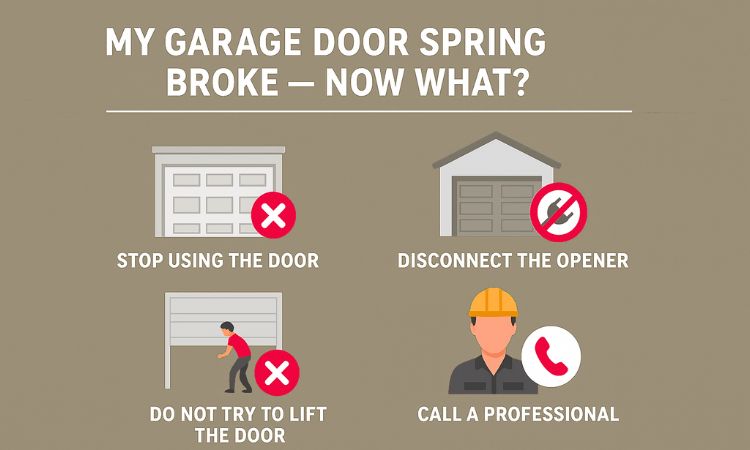
What to Do Immediately After Your Garage Door Spring Breaks

If you’ve confirmed your garage door spring broke, follow these steps right away:

  1. Stop using the door.
    Operating a door with a broken spring can destroy your opener and make the door unsafe.
  2. Disconnect the opener.
    Unplug it or pull the emergency release cord to prevent automatic operation and ensure you can open the garage door manually.
  3. Do not try to lift the door manually.
    A typical door weighs 150–300 lbs too heavy to lift safely without spring tension.
  4. Keep people and pets away.
    A door under improper tension could slam shut or fall without warning.
  5. Call a professional expert immediately.
    Experts like Queens NY Garage Door Repair have the training and tools to handle spring repairs safely and quickly.

Important:
DIY spring repair is possible, but it’s often recommended to install new springs for safety and to maintain a 5 year warranty. never recommended. Springs are under extreme tension and can cause severe injury if mishandled.

Can You Open a Garage Door with a Broken Spring?

In short You shouldn’t lift the garage door until you have installed the new garage door springs..
Here’s why:

  • The opener isn’t designed to lift the full door weight.
  • Forcing the opener can strip gears, break cables, or cause the door to crash.

However, if you absolutely must open the door (for example, your car is trapped inside), follow these steps carefully:

  1. Disconnect the opener.
  2. Have at least one strong helper with you.
  3. Lift the door slowly and evenly it will feel very heavy.
  4. Prop it open securely using a sturdy object (a locking clamp or 2×4).
  5. Close it manually and lock it afterward.

These steps are only temporary measures; always consult a garage door spring page for permanent solutions. Always schedule professional repair immediately afterward to ensure your door is covered under warranty.

Why You Shouldn’t Attempt a DIY Spring Replacement

Garage door springs are wound under hundreds of pounds of torque. A simple mistake can send metal parts flying leading to broken fingers, facial injuries, or worse.

Professional experts have the correct tension tools, experience, and safety equipment to replace springs properly. They also ensure the door is balanced and calibrated, preventing strain on the opener.

Also, note that springs work in pairs. If one breaks, the other is close to failing. Replacing both springs ensures even tension, smoother operation, and a longer lifespan for your new garage door springs.

How a Professional Replaces Garage Door Springs (Overview)

To help you understand the process, here’s how a trained technician typically performs a garage door spring replacement:

  1. Disconnects power to the opener for safety.
  2. Carefully unwinds the broken spring using winding bars and checks the tension on the springs.
  3. Measures the correct size, length, and wire diameter for replacement.
  4. Installation the new spring and winds it to the proper tension.
  5. Tests door balance and adjusts cable alignment.
  6. Lubricates moving parts for smooth operation.
  7. Reconnects and tests the opener to ensure it operates smoothly with the new springs installed.

This process usually takes 1–2 hours when performed by an experienced technician ensuring both safety and precision.

Garage Door Spring Replacement Costs

The cost of replacing a garage door spring depends on the spring type, door size, and your location.

Average Price Ranges:

  • Torsion Springs: $150–$350 (parts + labor)
  • Extension Springs: $100–$250 (parts + labor)

Factors that affect cost:

  • Type of spring and quality (standard vs high-cycle)
  • Door size and weight are crucial factors when selecting two springs for your garage door.
  • Whether both springs are replaced, it’s important to follow proper precautions for safety.
  • Regional labor rates

Pro Tip:
Invest in high-cycle springs rated for 20,000+ cycles they last almost twice as long as standard ones and are ideal for families who use their garage door multiple times per day.

Preventing Future Garage Door Spring Breakage

Proper maintenance can significantly extend your spring’s lifespan. Follow these expert tips:

  • Lubricate the springs every 3–6 months using silicone or lithium-based spray.
  • Check door balance periodically. If it feels heavy or uneven, call for professional garage door service for adjustment.
  • Avoid extreme cold exposure when possible metal contracts and becomes brittle.
  • Schedule annual professional garage door service for routine maintenance and to inspect the tension on the springs. To inspect tension, cables, and rollers, ensure you have a reliable garage door technician.
  • Replace both springs together to maintain even wear and balance.

A typical spring lasts 7–12 years or around 10,000 cycles (one cycle = one open and close). Regular care can double that lifespan.

FAQs

Q1. Can I replace just one spring?
Technically, yes but experts recommend replacing both. It keeps tension balanced and prevents the second spring from breaking soon after.

Q2. How long do garage door springs last before you need to replace the springs?
Most last between 7 to 12 yearsThe lifespan of springs can vary, depending on usage frequency and maintenance habits, including regular garage door service.

Q3. What happens if I keep using my door with a broken spring?
You risk damaging the opener, bending the door panels, or the door falling unexpectedly a major safety hazard.

Q4. Are there stronger or longer-lasting springs available?
Yes! High-cycle torsion springs are built to last twice as long as standard ones and are perfect for busy households.

Q5. Why did my spring break suddenly?
Common reasons include Issues such as metal fatigue, corrosion, or poor lubrication can lead to the need to replace the springs., or cold weather stress. Over time, wear and tear cause the spring to lose tension and eventually snap.

When to Call a Professional

If you hear a loud snap or your door suddenly won’t open, don’t try to troubleshoot it yourself.

Call a licensed and insured garage door expert like Queens NY Garage Door Repair. Our professionals can:

  • Replace broken springs safely and quickly to maintain your door working effectively.
  • Rebalance your door for smooth operation.
  • Inspect cables, rollers, and openers for related wear.
  • Provide high-quality, long-lasting replacement parts, including good springs and garage door components.

We offer same-day emergency repair services across Queens, NY, to restore your garage’s functionality and safety fast.

Conclusion: Safety First When Your Garage Door Spring Breaks

A broken garage door spring is one of those problems that should never be ignored. It can make your door unsafe, strain your opener, and put your family at risk.

If your garage door spring broke, here’s what to remember: it’s essential to call a pro for safe repair.

  • Stop using the door immediately.
  • Keep clear of the opening.
  • Call a professional repair expert right away.

Don’t risk a DIY fix; replacing the springs requires precision and proper tools, best handled by a professional garage door technician. Regular maintenance can help prevent future breakages, keeping your system reliable for years.

Call to Action:
If your garage door spring just broke, it’s essential to install new springs to restore functionality. Contact Queens NY Garage Door Repair Today for a fast, safe, and professional solution, consider a reliable garage door service. Your safety and your garage door’s longevity depend on expert care.

What Size Do Garage Doors Come In

When planning a new garage build, replacement, or remodel, one of the most important questions homeowners ask is: What size do garage doors come in?

Choosing the right size ensures your garage is functional, safe, and visually appealing.

The right garage door size doesn’t just determine how easily you can park your car it also impacts your home’s energy efficiency, security, and curb appeal. A properly sized garage door fits seamlessly into your home’s design and prevents issues like poor sealing, misalignment, or wasted space.

Today, we’ll cover everything you need to know about garage door dimensions: standard sizes, size variations for different vehicles, how to measure correctly, and when to consider a custom garage door for your unique space.

Why Garage Door Size Matters

Garage doors are one of the largest moving parts of your home, and the right size ensures they function smoothly. Selecting the right size matters for several reasons:

  • Functionality: A correctly sized door ensures easy vehicle entry and exit, preventing clearance issues.
  • Energy Efficiency: Proper fitting reduces air gaps, keeping your garage insulated and lowering utility bills.
  • Curb Appeal: Proportionate doors enhance your home’s exterior design and increase property value.

Homeowners often assume all garage doors come in standard sizes, but the truth is — garage door dimensions can vary widely depending on the type of garage, number of vehicles, and style of the home. Let’s break down the standard garage door sizes and how to select one that’s perfect for your space.

Standard Garage Door Sizes Overview

When we talk about “standard” garage door sizes, we’re referring to the most common dimensions used for residential garages. These sizes are determined by the number of cars the garage is designed to accommodate and the height and width required for most vehicles.

Most residential garage doors range from 8 to 18 feet wide and 7 to 8 feet tall. However, the right fit depends on whether it’s a single-car, double-car, or RV-sized garage.

While these are industry standards, homeowners always have the option to customize door sizes to fit older homes, oversized vehicles, or unique architectural designs.

Common Garage Door Sizes by Type

Garage doors are typically categorized by the number of cars they accommodate and their intended use. Below are the most common types with standard measurements and key considerations.

Single-Car Garage Door Sizes

A single-car garage door is designed for one vehicle.

Standard Sizes:

  • 8 feet wide x 7 feet high
  • 9 feet wide x 7 feet high
  • 10 feet wide x 7 feet high

These doors are ideal for compact cars, sedans, and small SUVs. For homeowners who prefer extra space to maneuver, a 9-foot or 10-foot width provides better clearance — especially if you use your garage for storage alongside parking.

Pro Tip: Choose a slightly wider door (9 or 10 feet) if your vehicle is a crossover, SUV, or truck to prevent scraping mirrors or bumpers.

Double-Car Garage Door Sizes

A double-car garage door is large enough to accommodate two vehicles side by side.

Common Sizes:

  • 14 feet wide x 7 feet high
  • 16 feet wide x 7 feet high
  • 18 feet wide x 7 feet high

A 16-foot width is the most common for modern homes and provides enough room for two mid-sized vehicles. Wider doors (18 feet) allow additional space for SUVs, trucks, or storage shelves.

Advantages of Double-Car Doors:

  • Fewer components compared to two separate single doors.
  • Easier to open and close with one opener.
  • Cleaner and more unified appearance.

RV or Oversized Garage Doors

If you own an RV, camper, or oversized truck, you’ll need a taller and wider door for clearance.

Common Sizes:

  • 10 feet wide x 8 feet high
  • 12 feet wide x 12 feet high
  • 14 feet wide x 14 feet high

These doors are typically custom-built or heavy-duty to handle the additional size and weight. The extra height ensures your RV or lifted truck can enter safely without scraping the top or sides.

Tip: Always measure your vehicle’s height (including roof racks or antennas) before finalizing dimensions.

Custom Garage Door Sizes

Not all garages fit standard dimensions — especially in older homes or custom-built properties. In such cases, custom garage doors are the perfect solution.

Custom sizing allows for unique width and height configurations, ensuring a perfect fit and optimal performance.

When Custom Sizing Is Needed:

  • Older homes with non-standard openings.
  • Detached or converted garages.
  • Architectural designs requiring specific proportions.

Material Flexibility: Custom doors can be made from wood, steel, aluminum, or composite materials, and can include insulation or window panels for energy efficiency and aesthetics.

Height and Width Considerations

While the standard garage door height is 7 feet, many homeowners now opt for 8 feet or higher, especially for SUVs and trucks.

Here’s why height and width adjustments matter:

  • Taller Vehicles: SUVs, vans, and lifted trucks require more clearance.
  • Wider Openings: Wider doors improve accessibility and prevent scraping when parking.
  • Driveway Angles: If your driveway slopes, extra height ensures the door doesn’t rub against the vehicle roof.

Tip: Measure your vehicle’s height and width, including mirrors, roof racks, or antennas, before finalizing the garage door size.

How to Measure Your Garage Door Opening Accurately

Measuring correctly ensures your new garage door fits perfectly. Even a small miscalculation can lead to installation problems or sealing gaps.

Follow these steps:

  1. Measure the width — from left to right of the garage door opening.
  2. Measure the height — from the floor to the top of the opening (header).
  3. Check the side room — space on each side for track installation (usually 3–4 inches needed).
  4. Measure headroom — distance between the top of the opening and the ceiling (required for springs and openers).
  5. Measure backroom — depth from the opening to the back wall (necessary for the door to open fully).

Pro Tip: Always measure twice, and have a professional confirm your dimensions before ordering a door — especially if your home is older or uneven.

Choosing the Right Garage Door Size for Your Home

Choosing the right size goes beyond fitting your car — it’s about aligning functionality, aesthetics, and efficiency.

Consider the Following:

  • Vehicle Size: Measure the width and height of all vehicles using the garage.
  • Garage Use: If you use your garage for storage or as a workspace, consider extra width.
  • Home Aesthetics: The door should complement your home’s proportions and design.
  • Building Codes & HOA Rules: Some neighborhoods restrict sizes or styles, so always check before installation.

A properly sized garage door not only enhances functionality but also boosts curb appeal and resale value.

Garage Door Sizes by Material and Style

The material and style of your garage door can influence available size options and design flexibility.

Steel Doors

  • Available in most standard and custom sizes.
  • Durable, low-maintenance, and affordable.
  • Ideal for homeowners seeking longevity and strength.

Wood Doors

  • Typically custom-built to fit specific openings.
  • Offer unmatched aesthetics but require regular maintenance.
  • Heavier than steel or aluminum doors.

Aluminum & Glass Doors

  • Perfect for modern or contemporary homes.
  • Available in wider panels for clean, open designs.
  • Lightweight and corrosion-resistant.

Insulated Doors

  • Great for energy efficiency and temperature control.
  • Available in most standard sizes but slightly thicker due to insulation layers.
  • Ideal for attached garages or homes in extreme climates.

Commercial Garage Door Sizes

Commercial buildings and warehouses require larger, more robust garage doors designed for frequent use and larger vehicles.

Typical Commercial Sizes:

  • Widths: 12–24 feet
  • Heights: 12–16 feet

Differences from Residential Doors:

  • Built with heavier materials like steel or aluminum.
  • Include high-cycle springs for constant operation.
  • Often feature added insulation or sectional designs for temperature control.

When to Choose a Custom Garage Door

Custom garage doors are ideal for homeowners who need non-standard dimensions or want a specific design aesthetic.

Situations That Call for Custom Doors:

  • Renovating an older property with unique architecture.
  • Replacing a door that doesn’t fit modern dimensions.
  • Desiring a personalized design, material, or color scheme.
  • Wanting to add insulation, glass panels, or unique hardware.

Benefits of Custom Doors:

  • Perfect fit for any opening size.
  • Increased property value and visual appeal.
  • Enhanced functionality and insulation performance.

Professional installers can measure precisely and design a door that balances form and function perfectly.

Conclusion: Get the Right Fit for Performance and Style

To summarize, garage door sizes generally range as follows:

  • Single-car: 8–10 feet wide, 7 feet high
  • Double-car: 14–18 feet wide, 7–8 feet high
  • RV or oversized: 10–14 feet high, 10–14 feet wide

The right size depends on your vehicles, lifestyle, and garage layout. Accurate measurement and professional guidance are key to ensuring smooth installation and lasting performance.

Contact a local garage door specialist to measure your space and recommend the ideal door size for your home’s design and needs.

FAQ Section

Q1. What is the standard size of a 2-car garage door?
The most common size for a double-car garage door is 16 feet wide by 7 feet high.

Q2. Can I make my garage door taller or wider?
Yes, but it requires structural changes. A professional can modify the frame or header to accommodate a new size.

Q3. Are there different sizes for insulated garage doors?
Insulated doors come in standard sizes but may be slightly thicker due to added insulation panels.

Q4. What size garage door do I need for an SUV or truck?
Opt for a door at least 9–10 feet wide and 8 feet high for sufficient clearance.

Q5. Do garage door sizes vary by brand?
Yes, manufacturers may offer slight variations in width or height, especially for custom or premium models.

How Often Should Garage Door Openers Be Replaced

Your garage door opener is one of the most important parts of your garage doors need to be replaced after several years of use., ensuring the door opens and closes safely and smoothly. Every time the garage door is opened, the opener completes one full cycle, and over the years this cycle count affects how long the garage door opener will last. Many homeowners don’t think about the need to replace the opener until it fails. lifespan or the life expectancy of their opener until something goes wrong, making it essential to understand how long do garage door openers last before you need to replace the opener?

When it’s time to swap your opener, and how to extend your garage door opener’s lifespan longevity of your garage door.

Knowing how long do garage door motors last, how long should a garage door opener last, and the overall garage door opener last range helps you avoid sudden malfunction and costly garage door repair Queens.

Why Knowing When It’s time to swap Your Garage Door Opener Matters

A garage door opener is more than a convenience—it’s a security device that ensures your garage doors function properly and may need to be replaced. When the time to replace your opener comes, consider new garage door openers. garage door opens or the door is opened and closed by the garage door opener, which may need to be replaced over time., every component works together, including the motor, sensors, springs, roller, hinge, and track system. If any part wears out, the opener might struggle or fail.

Older garage door openers often lack modern safety features, smart wi-fi connectivity, and rolling code technology. Understanding the typical lifespan and life expectancy of an opener helps you know when it’s time to swap your garage system and avoid bigger issues.

Average Lifespan of a Garage Door Opener

A garage door opener typically lasts 10 to 15 years, depending on usage and maintenance. This reflects the average life and typical lifespan of a garage opener. If the garage door is opened multiple times daily, wear increases, especially on components like the circuit board, chain, belt, and motor.

If you’re wondering how long do garage door motors last, the answer is similar—motors in residential garage door opener units usually last between 10 and 15 years, but can reach 15 to 20 years is the average garage door lifespan with proper care.

Different Openers and Their Lifespan

Chain-drive garage door openers — dependable, louder, lifespan about 10–12 years

Belt-drive garage door openers offer quieter operation — smoother and quieter, last 12–15 years

Screw-drive openers — excellent for heavy garage doors, typically last 10–13 years

If you have an old garage door opener, it’s best to check whether it still performs efficiently or if there are signs indicating it’s time for a replacement.

Factors Affecting How Long a Garage Door Opener Lasts

  • Usage Frequency: The more you use your garage door, the faster the opener experiences wear and tear, indicating it may be time to replace your opener wear and tear.
  • Regular Maintenance: Tasks like tightening hardware, keeping the door balanced, replacing worn torsion springs, and ensuring proper garage door service help openers last as long as possible.
  • Type of Opener: Whether you use a Genie, LiftMaster, chain-drive, or smart opener with wi-fi connectivity affects lifespan. Smart openers typically last longer due to better build quality.
  • Environment: Weather, moisture, dust, and debris affect the life of a garage door may indicate when to replace the opener. and the lifespan of your opener.
  • Installation Quality: Proper professional installation ensures components are aligned and reduces strain on the motor and garage door system.

Warning Signs Indicating It’s time to swap Your Garage Door Opener

Even if the opener works, there are clear signs that it’s time to replace it:

  • Slow or Struggling Operation: If the opener might hesitate or strain when the garage door opens, it could be failing.
  • Garage Door Opener Makes Loud Sounds: Grinding, rattling, or vibrating means internal gears are worn.
  • Inconsistent or Unresponsive System: If the opener doesn’t respond, or the sensor malfunctions, it may be nearing the end of its lifespan.
  • Frequent Repairs: If you’re constantly calling garage door professionals can help with garage door sales and installation., it’s time for a new opener.
  • Lack of Modern Safety Features: Older units may lack rolling code security, battery backup, or auto-reverse sensors.
  • Opener Fails to Open or Close: If the opener fails to open or close the door, that’s a major indicator the opener needs replacement.

Benefits of Replacing an Old Garage Door Opener

  • Improved Safety: New modern garage door openers provide better safety features and dependable operation.
  • Advanced Security: Today’s openers include garage door sales for various models. rolling code technology that prevents hacking.
  • Smartphone Control: Smart openers allow you to use a smartphone app for remote monitoring and control of garage door openers installed. door opening.
  • Quieter Operation: Belt-drive systems are much quieter, ideal for attached garages.
  • Better Reliability: New units perform better during power outages when equipped with battery backup.

When Replacement Is Better Than Repair

If the opener is outdated or unreliable, it’s time for a new system.

If the opener is older than 10 years, you may need to replace the opener as parts may be discontinued.

  • Repairing older garage door openers repeatedly wastes money
  • New technology improves usability and safety
  • If it fails to open or close, it’s time for a replacement

Tips to Extend the Lifespan of Your Garage Door Opener

To extend the lifespan and improve the longevity of your garage door:

  • Lubricate hinges, tracks, and roller routinely
  • Check garage door springs and balance to ensure the openers installed function properly.
  • Replace remote batteries annually
  • Keep the sensor aligned
  • Avoid adding weight to garage doors
  • Schedule yearly garage door repair inspections
  • Ensure the door may move smoothly without resistance

These steps help your opener last a long time and ensure the garage door opener’s lifespan remains strong.

Choosing the Right Replacement Garage Door Opener

When it’s time to swap the opener, consider:

Opener Types

  • Chain-drive
  • Belt-drive
  • Screw-drive
  • Smart openers with wi-fi connectivity
  • New Genie and LiftMaster models

What to Evaluate

  • Motor strength
  • Smart controls
  • Backup power
  • Build quality
  • Compatibility with your residential garage door’s

Consult a team of garage door experts who handle door sales or a garage door professional to choose the best option for garage door openers installed.

Conclusion: Know When It’s time to swap Your Garage Door Opener

A garage door opener can last between 10 and 15 years or longer with proper care. But when reliability drops or safety becomes a concern, it’s time to swap your garage opener. If you’re unsure, an experienced garage door technician can help you determine whether it’s time to replace your garage or simply repair.

Your garage doors are a major part of your home’s security ensure the opener supporting them is dependable, safe, and up to date.

Don’t Ignore These Warning Signs of Garage Door Problems

Your garage door is one of the most frequently used moving parts of your home, yet it’s often overlooked until something goes wrong. It provides security for your vehicles and belongings, adds curb appeal, and ensures smooth daily convenience. But like any mechanical system, garage doors wear down over time. Ignoring early warning signs can lead to costly repairs or even safety hazards.

In this article, we’ll discuss the most common warning signs of garage door problems, what causes them, when to call a professional technician, and how regular maintenance can keep your door working efficiently and safely.

Why Paying Attention to Garage Door Problems Matters

A well-functioning garage door doesn’t just make life easier it keeps your family safe and your property secure. When components like springs, cables, or sensors begin to fail, they can cause the door to malfunction or suddenly collapse. This poses significant safety risks and can lead to expensive damage if not caught early.

Early detection is key. Recognizing subtle garage door repair signs like strange noises, jerky movement, or inconsistent opening allows homeowners to address small issues before they escalate. Regular attention to these signals can extend your door’s lifespan and prevent inconvenient breakdowns.

This article will walk you through the key signs of garage door issues you shouldn’t ignore, their possible causes, and practical steps to fix or prevent them.

Common Warning Signs of Garage Door Problems

Unusual Noises or Grinding Sounds

Your garage door should open and close smoothly and quietly. If you start hearing grinding, squeaking, or rattling noises, something isn’t right. These sounds can result from worn-out rollers, loose hardware, or motor strain in automatic openers.

  • Squeaking or screeching: Usually indicates metal parts rubbing together and needing lubrication.
  • Grinding: Often a sign of worn-out rollers or misaligned tracks.
  • Banging or popping: Could mean a spring is wearing out and may soon fail.

If the noise persists after applying lubricant or tightening visible bolts, it’s time to have a garage door technician inspect it. Continuing to operate a noisy door can worsen the damage or cause a mechanical failure.

Slow or Jerky Door Movement

If your garage door moves slowly, hesitates mid-way, or shakes while operating, this could signal track misalignment, spring tension problems, or poor lubrication. A smooth, steady motion is normal; anything less means friction or imbalance is at play.

Common causes include:

  • Dirt or debris in the track
  • Rusted rollers
  • Worn-out motor gears
  • Weak or overstretched springs

Avoid forcing the door open or closed, as this can strain the motor. Regular maintenance and lubrication usually solve mild cases, but if the door continues to stutter, seek professional servicing.

Door Doesn’t Open or Close Fully

When your garage door stops short of fully opening or closing, it’s often due to sensor misalignment, limit setting errors, or damaged tracks. Modern doors have safety sensors that stop movement if something is detected in the door’s path. If those sensors are dirty or misaligned, the door might behave unpredictably.

Additionally, incorrect limit settings in your opener can prevent the door from completing its cycle. Always ensure that both tracks are clear of obstructions and sensors are properly aligned.

Ignoring this problem can lead to safety hazards especially if the door unexpectedly closes on a vehicle or person.

Sagging or Uneven Door Panels

If one side of your garage door looks lower than the other when it’s closed, you’re likely dealing with spring imbalance or structural warping. An unbalanced door strains the opener and can cause premature wear.

How to test your door balance:

  1. Disconnect the automatic opener.
  2. Lift the door manually halfway.
  3. If it stays in place, it’s balanced. If it falls or rises, the springs are uneven and need adjustment.

Balancing garage door springs is not a DIY-friendly task. It requires precise tools and should only be handled by a trained technician to prevent injury.

Excessive Vibration or Shaking During Operation

Excessive vibration is another warning sign of garage door problems. A door that rattles or shakes while moving may have loose bolts, worn rollers, or bent tracks. These issues may seem minor at first but can escalate quickly.

Over time, vibration can loosen connections further and damage the opener’s internal mechanisms. Tightening hardware and replacing worn rollers often restores smooth operation. If vibration persists, the issue may lie deeper in the track alignment or motor mount.

Remote or Keypad Malfunctions

If your garage door remote or keypad stops working, it doesn’t always mean the batteries are dead. The issue might stem from electrical interference, wiring faults, or even receiver misalignment.

Start with these quick checks:

  • Replace batteries and reprogram the remote.
  • Ensure the antenna on the motor unit isn’t blocked.
  • Check if other nearby electronics are interfering with the signal.

If the issue persists, a professional should examine the system. Electrical malfunctions can affect safety features and cause intermittent operation.

Visible Damage to Springs, Cables, or Tracks

Your garage door’s springs and cables bear enormous tension. If you notice frayed cables, rusty springs, or bent tracks, stop using the door immediately. These parts can snap unexpectedly and cause severe injuries or property damage.

Broken torsion springs, in particular, should only be replaced by a professional technician. Attempting DIY repairs can be extremely dangerous due to the high-tension mechanisms involved.

Higher Energy Bills or Drafts Around the Garage Door

A garage door that doesn’t seal properly can let in outside air, leading to drafts, temperature fluctuations, and higher energy costs. Worn weatherstripping, damaged seals, or gaps along the door’s edges often cause this problem.

Replacing worn seals and insulating the door can improve comfort and reduce utility expenses. This is especially important if your garage connects directly to your home.

What Causes These Garage Door Problems?

Understanding the root causes of these issues helps prevent them in the future. Here are some of the most common reasons:

  • Aging Components: Springs, cables, and rollers naturally wear out after thousands of cycles.
  • Lack of Maintenance: Skipping lubrication or inspections allows dirt and rust to build up, causing friction and wear.
  • Weather-Related Damage: Moisture, rust, and temperature changes can cause warping or corrosion.
  • Improper Installation: If the door or tracks were not installed level, operational problems can appear early.
  • Unbalanced Tension: Uneven spring tension causes jerky motion and premature part failure.

When to Call a Professional Technician

Some garage door problems are safe for homeowners to handle, such as cleaning sensors or lubricating rollers. But others especially those involving springs, cables, or motors require a professional’s expertise.

You should contact a garage door repair technician if:

  • The door won’t open or close at all.
  • You hear loud bangs or see broken springs.
  • The door looks uneven or off-track.
  • The opener motor strains or overheats.

Working with high-tension components can be dangerous without proper tools and training. Always choose a licensed and insured garage door service provider. Check online reviews, verify warranties, and confirm that they offer emergency repair services if needed.

Preventive Maintenance Tips to Avoid Future Issues

Regular care can extend your garage door’s life and reduce unexpected failures. Here are some practical garage door maintenance tips:

  • Inspect monthly: Look for rust, fraying cables, or loose bolts.
  • Lubricate moving parts: Apply silicone-based lubricant to rollers, hinges, and springs every few months.
  • Clean photo-eye sensors: Dust or spider webs can block sensors and prevent proper door operation.
  • Tighten hardware: Check brackets, bolts, and screws regularly to prevent vibration.
  • Test balance and auto-reverse: Ensure safety systems are functioning correctly.
  • Schedule annual tune-ups: Professional maintenance can identify wear before it becomes serious.

By dedicating just a little time to upkeep, you can save hundreds in repairs and ensure long-term safety.

Stay Proactive to Keep Your Garage Door Safe and Reliable

Garage doors are essential yet often neglected parts of the home. By staying alert to these warning signs of garage door problems, you can catch issues early and avoid costly emergencies. From unusual noises to uneven panels and sensor malfunctions, each signal tells you something about the health of your door.

Don’t wait until your garage door stops working completely. Stay proactive, perform regular maintenance, and call a trusted technician when needed.

Schedule a professional inspection today to keep your door running smoothly and your family safe.

FAQ Section (SEO Boost)

Q1. What are the most common garage door problems?
The most frequent issues include broken springs, worn rollers, noisy operation, and misaligned sensors. Regular maintenance helps prevent most of these problems.

Q2. How do I know if my garage door spring is bad?
If your door feels heavy, opens unevenly, or doesn’t stay halfway open, the spring may be broken or unbalanced.

Q3. Can I fix garage door problems myself?
Minor tasks like cleaning tracks and lubricating parts are safe DIY jobs. However, spring or cable repairs should always be handled by professionals.

Q4. How often should I have my garage door serviced?
An annual inspection by a certified technician is recommended to ensure optimal performance and safety.