When your garage door won’t close or suddenly reverses for no apparent reason, faulty safety sensors are often to blame. Knowing how to fix garage door sensor issues can save you time, money, and the frustration of dealing with a door that refuses to cooperate.
This guide walks you through how garage door sensors work, how to diagnose common problems, and step-by-step solutions to fix garage door sensor malfunctions. While this advice is especially helpful for homeowners in Queens, NY, the same principles apply nationwide.
Garage door safety sensors play a critical role in preventing accidents. Understanding how to troubleshoot and repair them ensures your garage door operates safely—and helps you avoid unnecessary service calls.
Understanding Garage Door Safety Sensors
Before attempting repairs, it’s important to understand what garage door sensors do and why they matter.
What Are Garage Door Safety Sensors?
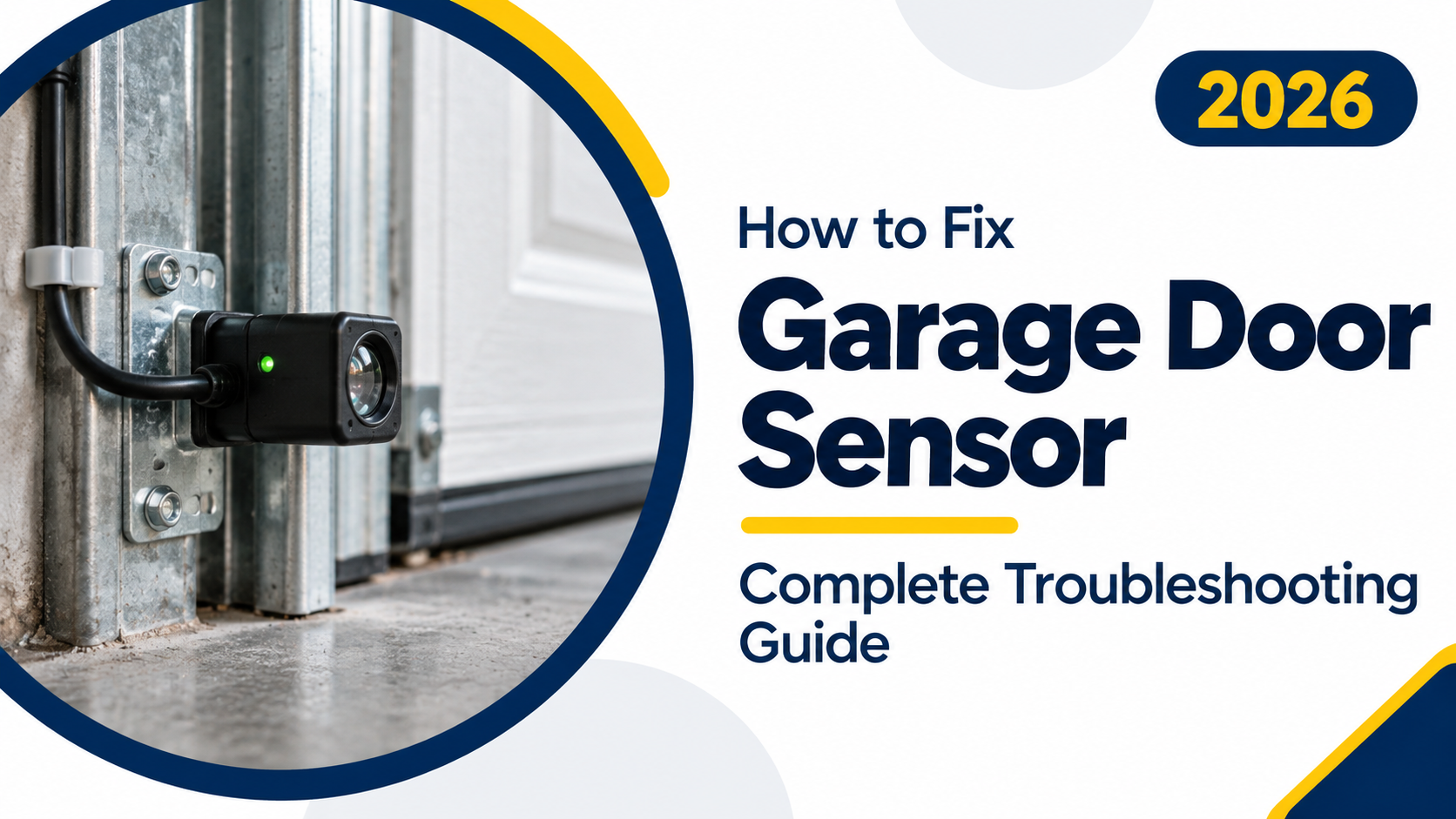
Garage door safety sensors—often called photo-eye or photoelectric sensors—are small devices mounted on both sides of the garage door opening near the floor. They send an invisible infrared beam across the doorway. If that beam is interrupted while the door is closing, the opener automatically stops and reverses the door.
Since 1993, these sensors have been federally required after numerous accidents involving garage doors. If sensors are dirty, misaligned, or malfunctioning, your garage door will not close properly. That’s why knowing how to fix garage door sensor problems is essential for safe operation.
Signs Your Garage Door Sensors Need Fixing
Catching sensor issues early can prevent bigger problems later. Common warning signs include:
The door won’t close
Your garage door opens normally but refuses to close unless you hold the wall button down. This usually points to sensor alignment or connection issues.
The door reverses immediately
The door starts to close, then reverses before reaching the ground—even when nothing is in the way. This often means the sensors are misaligned or overly sensitive.
Sensor lights are off or blinking
Most sensors have indicator lights (green, red, or amber). Lights that are off, blinking, or inconsistent signal a power, wiring, or alignment issue.
Quick Garage Door Sensor Diagnosis Checklist
Before making adjustments, take a few minutes to identify the problem.
Step 1: Check the Sensor Lights
Indicator lights tell you a lot:
- Both lights solid: Sensors are aligned and functioning
- One solid, one blinking or off: Sensors are misaligned
- No lights: Power or wiring issue
- Blinking lights: Obstruction or weak beam connection
Step 2: Look for Obstructions
Many sensor issues are caused by simple blockages. Check for:
- Dirt, dust, or cobwebs on lenses
- Toys, tools, or debris in the beam path
- Snow, ice, or road salt buildup (common in winter)
- Condensation or water droplets on the lenses
How to Fix Garage Door Sensor Problems Step by Step
Solution 1: Clean the Sensors
Dirty sensors are one of the most common—and easiest—issues to fix.
How to clean garage door sensors:
- Turn off power to the garage door opener
- Inspect the sensor lenses closely
- Gently wipe lenses with a microfiber cloth
- Use mild lens cleaner on the cloth if needed (never spray directly)
- Dry completely to prevent moisture interference
- Restore power and test the door
In many cases, cleaning alone restores normal operation.
Solution 2: Realign the Sensors
Misalignment is the most frequent reason homeowners need to fix garage door sensor issues.
How to realign garage door sensors:
- Loosen the mounting brackets slightly
- Measure both sensors to ensure they’re the same height from the floor
- Point the sensors directly at each other
- Use a level to ensure they’re perfectly vertical
- Watch the indicator lights—both should become solid
- Tighten brackets carefully without shifting alignment
- Test several open-and-close cycles
Queens, NY–Specific Sensor Issues
Weather Challenges
Summer humidity can cause condensation on sensor lenses, disrupting the beam. More frequent cleaning during warmer months helps prevent problems.
Winter conditions often lead to snow, ice, and salt buildup on sensors. Protective covers or small hoods can reduce how often sensors need attention.
Urban Environment Factors
Dust, pollution, and vehicle exhaust common in Queens garages can leave a film on sensors. Monthly cleaning helps maintain consistent performance.
Advanced Sensor Troubleshooting
Sunlight Interference
Direct sunlight can overwhelm the infrared beam at certain times of day.
Fixes include:
- Installing sensor hoods or visors
- Slightly adjusting sensor angles
- Relocating sensors out of direct sunlight
- Upgrading to sunlight-resistant sensors
Electrical Interference
LED bulbs, routers, or nearby electronics can interfere with sensor signals.
Possible solutions:
- Replace LED bulbs with garage-safe models
- Move wireless devices away from the opener
- Add ferrite cores to sensor wires
- Shield wiring with metal conduit
Preventing Future Garage Door Sensor Problems
Protect Sensors from Damage
Install guards or barriers to prevent accidental bumps from vehicles, bikes, or trash bins. Make sensor locations visible with markings or tape.
Monthly Sensor Testing
Regular testing reduces surprise failures:
- Walk through the beam during closing—the door should reverse
- Check indicator lights
- Place an object in the beam path to confirm response
- Test the manual release periodically
FAQs About Fixing Garage Door Sensors
How long do garage door sensors last?
Most sensors last 10–15 years. Frequent failures on older sensors may signal it’s time for replacement.
Can sensors be bypassed temporarily?
Holding the wall button down can override sensors, but this disables safety features and is not recommended.
Why does the door work with one control but not another?
This is usually an opener or wiring issue—not a sensor problem.
Final Thoughts: Fixing Garage Door Sensor Issues the Right Way
Learning how to fix garage door sensor problems gives homeowners confidence, saves money, and ensures safe operation. Most sensor issues are caused by dirt, misalignment, or environmental factors—and can be resolved with basic tools and routine maintenance.
Regular cleaning, proper alignment, and proactive testing go a long way toward keeping your garage door operating safely and reliably. When problems persist or sensors show signs of age-related failure, professional service may be the most effective solution.
By following the steps in this guide, you’re well equipped to diagnose, fix, and prevent the most common garage door sensor issues—whether you’re dealing with Queens winters or everyday wear and tear anywhere in the country.