Introduction
When a garage door suddenly refuses to open, it’s often due to a mechanical, electrical, or safety-related problem inside the system. From worn-out springs to sensor failures, even small issues can disable the entire door. These problems tend to happen unexpectedly and can easily disrupt your day.
Addressing the issue quickly is important not only for convenience but also for safety. A malfunctioning garage door can pose risks, especially when components like springs or cables fail under tension. That’s why knowing how long a repair may take helps you plan accordingly.
It’s important to understand that no two garage door breakdowns are exactly the same. Repair time varies depending on the cause, the door type, part availability, and the technician’s experience. Still, professionals can complete most repairs surprisingly quickly.
How Fast Can a Professional Fix a Garage Door?
Most garage door issues can be fixed within 15 minutes to a few hours, depending on the nature of the problem. Simple issues like dirty sensors may be resolved in minutes, while more complex repairs like broken springs require specialized tools and training.
Repair speed is influenced by several factors including the type of malfunction, how severe the damage is, whether replacement parts are available, and the technician’s diagnostic skill. A quick inspection helps determine the exact cause and speeds up the repair process significantly.
Factors That Determine How Long a Professional Repair Will Take
Type of Problem
The type of problem is the number one factor affecting repair time. Some issues are straightforward and require basic adjustments, while others involve heavy components or electrical troubleshooting. Each issue has its own estimated time window based on the effort required.
Common problems and repair times include:
- Broken spring: 30–60 minutes
- Snapped cable: 30–90 minutes
- Misaligned tracks: 45–90 minutes
- Sensor issues: 10–20 minutes
- Remote or opener malfunction: 20–45 minutes
Severity of Damage
The more severe the damage, the longer the garage door repair will typically take. A slightly bent track or weak spring may be a quick fix, but a fully broken spring or twisted cable system requires more labor and safety precautions. Serious damage may also require additional parts that extend the repair process.
Severity factors include:
- Minor vs. major mechanical failure
- Whether multiple components are affected
- If additional parts or reinforcements are necessary
Garage Door Type
Not all garage doors are built the same, and their differences impact repair time. Lightweight steel doors are generally quicker to fix, while heavy wooden or double-wide doors require more precise adjustments. Smart systems and high-end openers may also involve extra diagnostic steps.
Garage door types that affect repair time:
- Single vs. double
- Sectional vs. tilt-up
- Manual vs. automatic
- Smart opener or Wi-Fi–enabled systems
Technician Experience & Tools
The skill level of the technician plays a big role in how quickly a problem is resolved. Experienced professionals can identify issues almost immediately, while beginners may take longer to diagnose and repair the problem. Proper tools also improve accuracy and reduce repair time.
How expertise improves repair speed:
- Faster, more precise diagnostics
- Safe handling of high-tension components
- Professional tools that speed up installation and adjustments
Availability of Replacement Parts
The availability of parts determines whether the repair can be completed during the first visit. Most reputable technicians carry springs, cables, rollers, and openers in their service vehicle. However, custom or older garage doors may require special-order parts.
Part availability impact:
- In-stock parts enable same-day repair
- Specialty or custom components may require next-day service
- Rare opener parts may extend repair timelines
Common Garage Door Issues & Typical Professional Repair Times
Broken Springs – 45 Minutes to 1 Hour
Garage door springs bear the weight of the door and allow it to lift smoothly. When a spring breaks, the door becomes too heavy to open, even manually. Professionals replace springs with proper tools and ensure the door is balanced again, which is crucial for safe operation.
Typical repairs include:
- Removing broken springs
- Installing new torsion or extension springs
- Testing door balance and tension
Door Off Track – 1 to 2 Hours
A door can come off its track due to impact, worn rollers, or damaged hardware. This is a safety hazard and requires careful realignment. Technicians must reset the rollers, adjust the tracks, and check for structural damage before the door is safe to operate again.
Repair process includes:
- Lifting and repositioning the door
- Straightening or replacing tracks
- Tightening hardware and brackets
- Testing smooth movement
Faulty Sensors – 10 to 20 Minutes
Garage door sensors prevent accidents by detecting objects in the door’s path. When sensors are misaligned, dirty, or damaged, the door may refuse to open or close. Fortunately, these issues are quick and easy for professionals to fix.
Common fixes include:
- Cleaning sensor lenses
- Realigning sensor brackets
- Repairing or tightening wiring connections
Opener Problems – 20 Minutes to 1 Hour
Openers can malfunction for various reasons, including motor issues, remote failures, wiring problems, or damaged gears. A technician will perform a diagnostic check to determine the exact cause and repair or replace components as needed.
Possible repairs include:
- Fixing motor or chain issues
- Replacing logic boards
- Reprogramming remote/keypad
- Resetting opener settings
Cable Problems – 30 to 90 Minutes
Cables help lift and lower the garage door evenly. When they fray or snap, the door can tilt or become stuck. Replacing cables requires precision and should never be attempted without proper training due to the high tension in the system.
Professional cable repair usually involves:
- Removing worn or broken cables
- Installing new high-tension cables
- Inspecting drums and pulleys
When You Can Expect Same-Day Repair
Most garage door problems can be fixed the same day, especially if the required parts are readily available. Technicians typically carry the most common replacement components, making the repair process efficient and convenient.
Typically same-day repairs include:
- Sensors
- Springs
- Cables
- Rollers
- Hinges
- Opener fixes
May require next-day service:
- Custom-size tracks
- Specialty springs
- Smart-opener circuit boards
How Professionals Diagnose a Garage Door That Won’t Open
Technicians begin with a thorough inspection of the entire system to pinpoint the exact cause of the failure. This helps avoid unnecessary repairs and ensures the door is fixed right the first time. The process includes mechanical checks and electrical testing.
Diagnosis steps include:
- Examining springs and cables
- Checking track alignment
- Testing sensors and opener
- Inspecting rollers and hinges
- Reviewing wiring and circuits
Signs You Should Call a Professional Immediately
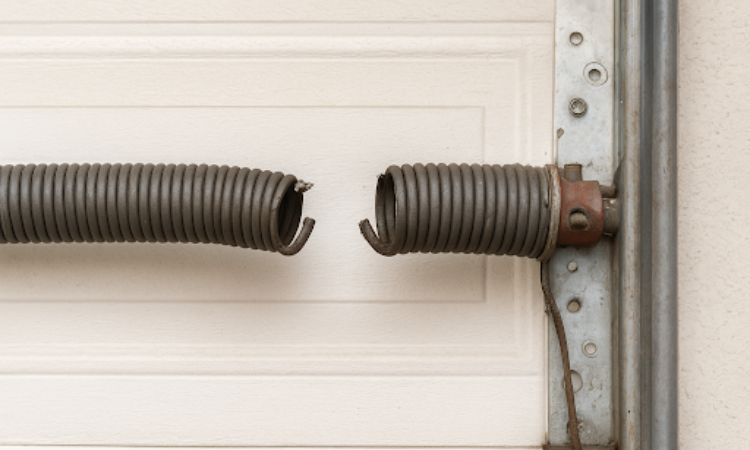
Some garage door problems indicate serious mechanical failure or safety risks. If you notice any of these signs, stop using the door immediately and contact a professional to avoid injury or further damage.
Warning signs include:
- Burning smell from the opener
- Loud snap or bang
- Door stuck halfway
- Frayed or broken cables
- Door feels unusually heavy
Why You Shouldn’t Attempt DIY Repairs
Garage doors contain high-tension components that can be dangerous for homeowners to handle. DIY attempts often make the problem worse or lead to injuries. A professional has the tools and training needed for safe and effective repairs.
DIY risks include:
- Spring tension accidents
- Electrical hazards
- Damaged opener or tracks
- Increased repair cost due to mistakes
Tips to Avoid Future Delays in Garage Door Repair
Regular garage door maintenance keeps your system functioning smoothly and prevents unexpected breakdowns. Simple monthly checks can extend the lifespan of your opener and hardware while reducing repair time in the future.
Maintenance tips include:
- Lubricating moving parts regularly
- Cleaning and aligning sensors
- Inspecting cables and rollers
- Scheduling an annual tune-up
- Replacing springs every 7–10 years
Cost vs. Speed: Is Faster Repair More Expensive?
Faster repairs may come with additional costs, especially for emergency or after-hours service. However, immediate attention often saves money by preventing more serious damage that would be costly to fix later.
Factors that increase cost:
- Emergency same-day service
- After-hours or weekend repair
- Parts that need special ordering
Conclusion
Most garage door issues are resolved quickly when handled by a trained technician. Whether it’s a broken spring, faulty sensor, or opener malfunction, a professional can diagnose and repair the problem safely and efficiently. If your garage door won’t open, it’s best to call an expert right away to prevent further damage and restore convenience as quickly as possible.

 How to Get the Bes..