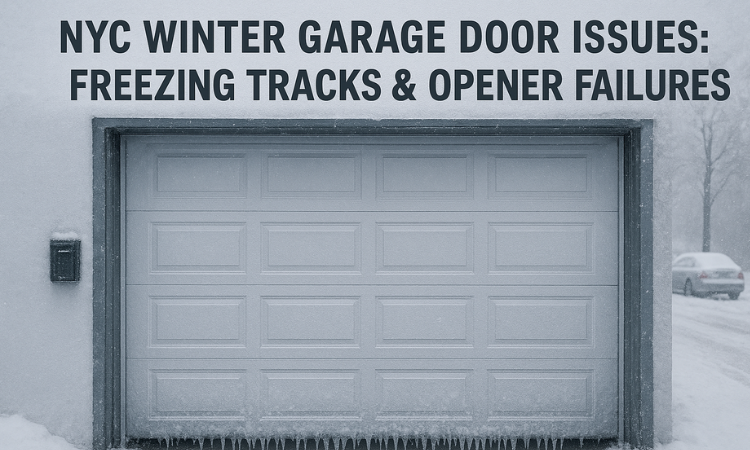
Winter in New York City brings cold winds, freezing temperatures, and constant moisture, which can exacerbate garage door opener issues. For homeowners across Queens, Brooklyn, Staten Island, and other NYC neighborhoods, one of the most common frustrations is a garage door that suddenly stops working when the temperature drops, often causing the door to malfunction. This is why a reliable garage door repair in Queens, ensure your garage door won’t close properly before contacting a professional. Professional garage door services receive a significant rise in calls during winter due to common problems like frozen tracks. From freezing tracks to garage door opener issues, winter weather puts extra stress on your garage door system — often leading to common garage door problems that require professional garage door repair.
This blog explains why these issues happen, the early signs you should watch for, and the best preventive steps to keep your garage door operating smoothly throughout the winter season.
🧊 Why NYC Winters Are Tough on Garage Doors
NYC weather patterns are unpredictable, which can be a common cause of issues when your garage door isn’t functioning properly. One day the temperature is above 50°F and the next day it drops below freezing, causing unusual noises from the garage door. This constant shift creates ideal conditions for garage door problems.
Here’s why winter causes trouble:
1. Metal Contraction from Freezing Temperatures
Garage door components such as tracks, springs, hinges, and rollers are primarily made of steel, including the garage door spring that supports the door’s weight. When temperatures fall, steel contracts and becomes less flexible, which can lead to problems with the garage door cable. This can cause parts to tighten, shift, or lose alignment. As a result, the garage door may move unevenly or grind against the tracks.
2. Moisture That Freezes Overnight
NYC’s winter moisture — especially in Queens and coastal areas — creates frost buildup along the tracks and under the garage door seal, leading to common garage door repairs. When slush, rainwater, or melted snow refreezes, the door bottom may stick to the ground or ice may collect inside the tracks, causing the door to malfunction. This makes it difficult, or sometimes impossible, for the garage door tracks to function properly and for the door operation to be smooth.
3. Thickened Lubrication
Lubricants that usually keep the door moving smoothly can thicken in the cold, causing the garage door won’t open smoothly. When that happens, rollers and hinges do not glide properly, putting stress on the opener, which can lead to common garage door problems. A door that moves slowly or vibrates heavily is often struggling against thickened grease or frozen components, leading to a garage door that won’t close properly.
4. Opener & Sensor Malfunctions
Cold air affects electronic components, causing the door panel to malfunction. Garage door openers may slow down or fail to respond, especially older models, leading to common garage door issues. The photo-eye sensors at the bottom of the door can fog up or misalign. Even the remote batteries weaken in cold weather, reducing signal strength, which can make the garage door won’t open when needed.
🛠️ Freezing Tracks — The Most Common NYC Winter Garage Door Problem
Frozen tracks are one of the biggest reasons homeowners call for winter repair services. When ice forms inside the track or around the rollers, the garage door won’t glide smoothly, leading to potential misaligned tracks. In severe cases, the door may jam completely due to an obstruction in the tracks.
Warning signs include:
- Door starts and stops unexpectedly
- Loud scraping or grinding noise may suggest that the garage door makes contact with misaligned tracks or damaged garage door components.
- The garage door feels heavier than usual, making it difficult to open and close smoothly, which might indicate a problem with the torsion spring or door rollers.
- Visible frost along the tracks
- The bottom panel is stuck to the driveway, preventing the garage door from closing completely and indicating potential issues with the door operation that may require a qualified garage door technician.
What NOT to do:
- Don’t use boiling water — it can warp the metal.
- Don’t keep pressing the remote — this can burn out the motor.
- Don’t try to force the door open manually — this may bend the garage door tracks and cause further issues.
If you notice the tracks are frozen, gently remove ice with warm water (not hot), apply salt around the base, and let the area dry completely.

🔧 Garage Door Opener Failures in Cold Weather
A garage door opener that works perfectly in fall may start struggling during winter due to issues with the garage door tracks. The cold affects both the motor and the internal lubrication.
Common signs of a winter opener issue:
- Opener light blinks but the door doesn’t move, which may indicate issues with the garage door panels or a need to replace the batteries.
- Door opens halfway and reverses, which is a common issue that requires troubleshooting.
- Remote has to be pressed multiple times
- Slow or jerky door movement
- Clicking sound but no response could indicate that the opener needs a professional garage door repair or that the batteries need to be replaced.
These problems often come from frozen hinges, thickened grease inside the opener, misaligned sensors, or worn mechanical parts that can’t handle low temperatures, leading to issues with closing the door.
Simple preventive steps:
- Replace remote batteries at the start of winter to avoid a garage door that won’t open due to weak signals.
- Use silicone-based lubricant on all moving parts to ensure smooth operation and prevent issues with closing the door.
- Keep safety sensors clean and aligned to ensure your garage door operates without issues and maintains smooth operation.
- Make sure door springs and cables are in good condition
- Schedule a winter tune-up with a professional garage door technician if the opener is older than five years to prevent potential garage door opener issues.
🏙️ Why NYC Homes Need More Frequent Winter Maintenance
NYC homes face more extreme conditions than many suburban areas, increasing the likelihood of common garage door repairs and issues that could arise from damaged garage door panels. City garages often sit close to sidewalks, meaning snow, salt, and slush frequently accumulate near the door. Heavy vehicle traffic, narrow driveways, and limited drainage can also worsen freezing issues, impacting the smooth operation of your garage door.
A poorly maintained door during winter can result in:
- Broken springs can lead to significant garage door opener issues, affecting the overall door operation.
- Bent tracks can lead to a garage door that won’t open properly, necessitating a troubleshooting guide for effective repairs and possibly closing the door safely.
- burned-out opener motors
- A complete system failure can often be attributed to issues with the garage door’s components, such as misaligned tracks or a faulty garage door cable, which may require a professional garage door repair.
Repairing these common garage door repairs in freezing weather can cost more and take longer, making prevention essential for NYC residents.
✅ Winter Maintenance Checklist for NYC Homeowners
To avoid sudden winter breakdowns, follow this simple checklist, including checking the garage door cables and tracks.
- Lubricate hinges, rollers, and tracks with cold-weather lubricant to prevent a garage door that won’t open or close properly and ensure smooth operation.
- Clear snow and slush around the garage door base daily
- Inspect weather stripping for cracks or gaps, as these can lead to common garage door issues during the winter, affecting the garage door’s efficiency.
- Keep tracks clean and dry to prevent issues that could lead to a noisy garage door or misaligned tracks.
- Check opener sensitivity and sensor alignment to troubleshoot issues when the garage door won’t open.
- Get a professional garage door tune-up before temperatures drop below freezing to ensure your garage door opens and closes without problems.
❄️ Final Thoughts
NYC winter garage door issues such as freezing tracks and opener failures are common but manageable with the right care. Regular maintenance, proper lubrication, and prompt attention to early signs can help prevent costly repairs and ensure your garage door works smoothly all season long, avoiding common garage door repairs.
If your garage door is stuck, slow, or making unusual sounds this winter, it might be a sign that the garage door opener’s functionality is compromised. Contacting a professional repair service. Consulting a troubleshooting guide is the safest and quickest way to fix the issue with your garage door’s performance
 How to Get the Bes..